Middle East EV sourcing
China EV export checklist for the Middle East: approve the car, charger and climate case separately
“Middle East specification” is not a regulatory conclusion. Saudi Arabia, the UAE and other markets operate national conformity systems, and vehicle approval may not approve the portable or wall charger. Treat compliance, hot-weather performance and service as separate evidence files.
Fix the country, applicant and conformity route
State the final registration country, importer, category, new or used status and private or fleet use. Saudi SASO offers an EV model conformity service and identifies forms, supplier declarations, test reports and supporting technical material. The UAE operates its own regulated-product conformity service. A Gulf standard may be technical evidence, but it does not replace the destination's application, customs and registration steps.
Ask a recognised local party to pre-screen the actual model code: eligible applicant, sample or testing, accepted laboratories, Arabic translation or legalisation, labels, customs and registration sequence. If the seller says only “GCC specification” but cannot show an approval route covering the battery variant and delivered VINs, keep the phrase out of the contractual description.
Treat the vehicle and charger as two regulated products
SASO's published conformity services distinguish the electric vehicle from chargers and accessories. Build two evidence lists: one for the car, battery, brakes, lighting and electrical safety, and another for the portable lead, wall equipment, plug, protection and installation. A registrable vehicle does not make a China-market portable charger suitable for local sockets or electrical rules.
Record vehicle AC and DC inlets, voltage range, phase, maximum input and communication protocol. Record charger input and output, environmental protection, operating temperature, cable and conformity evidence. A locally qualified electrician should confirm distribution, earthing, residual-current and over-current protection. An adapter does not legalise an unaccepted product or solve protocol and thermal differences.
Test thermal management after sun exposure and at highway speed
Do not reduce hot-climate evaluation to one maximum ambient figure. Ask about liquid or air cooling, coolant circuit, compressor and fluid specification, fast-charge derating, battery conditioning after sun exposure, continuous cabin-cooling load and warning strategy. Evidence must identify the delivered battery variant, not merely describe a brand's general technology.
A local pilot should cover a heat-soaked start, urban congestion, sustained highway speed, repeated fast charging and full passenger load with climate control. Log battery or powertrain warnings, charging-power changes, cabin cool-down, arrival reserve and parked energy use. Do not use range from a mild test cycle as a Gulf highway promise; set a representative route and measurable arrival reserve.
Check dust, unsealed roads, water and tyres
Dust can load condensers and filters and reduce cooling efficiency; stones and rough surfaces increase tyre and underbody exposure. The specification should identify cabin and cooling filters, cleaning intervals, charge-port sealing, battery underbody protection, towing point, lifting position and tyre load and speed ratings. Off-road styling is not evidence of sand or unsealed-road capability.
Heavy rainfall can create standing water in some cities, so obtain the manufacturer's water limits and post-exposure procedure. An underbody strike, immersion or battery-case damage should lead to high-voltage isolation and professional assessment, not continued fast charging or shipment. Stock locally available tyres, filters and critical cooling components with the pilot fleet.
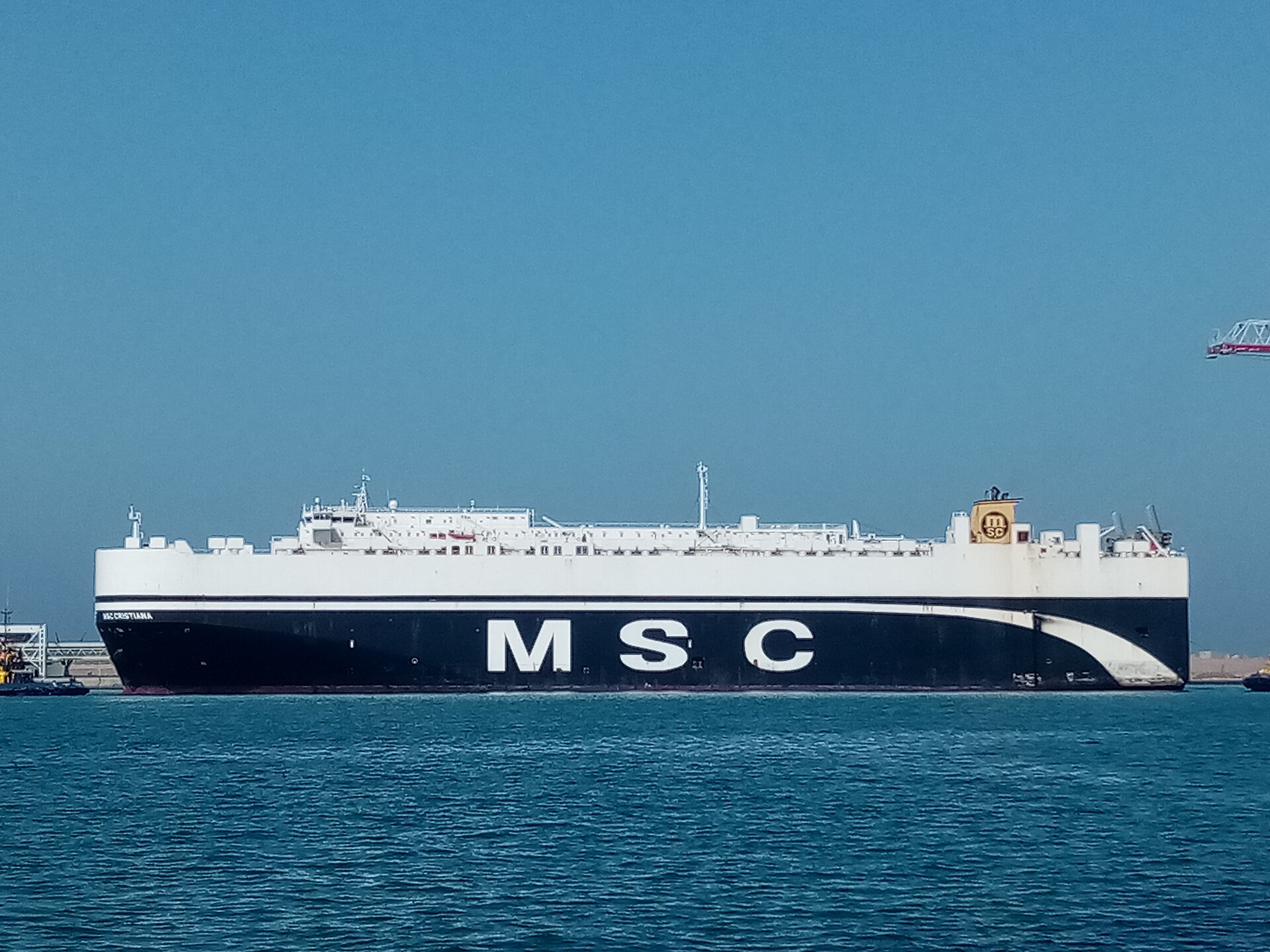
Manage port heat and shipping condition
Declare the battery-powered vehicle and obtain route-specific written conditions for state of charge, driveability, keys, alarm, damaged units and RoRo or container service. Record VIN, body, underbody, mileage, charge, warning lamps and loose equipment at origin. Collision, water, unusual heating or a high-voltage fault must be disclosed before terminal entry.
Arrange prompt destination collection so vehicles are not left disconnected and unmonitored in sun exposure. Define transport mode, sleep setting, 12-volt battery care, application and key transfer. Confirm how the marine policy treats the installed battery, handling damage, general average and proof of a heat-related loss. Photograph and read faults immediately on arrival.
Make Arabic after-sales support exist before delivery
Provide the user manual, safety labels, rescue sheet, warranty and essential interface in Arabic or another language accepted in the destination. Test mobile application, maps, account creation, remote climate control, updates, embedded connectivity and diagnostics outside China. If a key function depends on a Chinese telephone number, application store or server permission, agree a workable alternative before payment.
The support pack contains diagnostic tool and account, fault information, workshop manual, parts catalogue, filters and cooling parts, lamps and panels, battery incident procedure and technical contact. Warranty terms identify country, start date, labour, cross-border transport, software and battery claim. Where no local high-voltage capability exists, include training and a safe isolation area.
Release only against testable conditions
Go conditions are a valid national conformity route, separate pre-checks for vehicle and charging equipment, matching configuration and reports, acceptable hot-route pilot, carrier acceptance, local-language support and critical spares. The cost table separates vehicle, export, ocean freight, insurance, destination, tax, certification, installation and service.
Stop or hold the order when “GCC specification” has no supporting record, the test report excludes the battery, the charger is not accepted, thermal evidence is missing, connected services are region-locked, the vehicle has unexplained water exposure or the seller withholds diagnostics. A Middle East-ready delivery is not a cosmetic package; car, charging, climate performance and service must all work.
Collect the evidence needed for resale
Fleet and dealer buyers should plan for a second owner. VIN lookup, maintenance history, software updates, collision repair and battery assessments need to remain accessible in the destination. Require exportable service records and an explanation of which basic vehicle functions remain available if an application account or overseas server service is later discontinued. Confirm that workshop entries can be attached to the vehicle rather than only to one distributor's private account.
During the pilot, log energy use, fast-charge power, faults, tyres and cooling maintenance in both the hottest and milder seasons, using a consistent method. Continuous local evidence is more useful than an unsupported residual-value promise and helps the next order select the appropriate battery, tyre and spare-parts mix. It also gives insurers, lenders and future buyers a clearer basis for assessing documented vehicle condition instead of relying on age and odometer alone.
Frequently asked questions
Does “GCC specification” guarantee registration in every Gulf country?
No. Applicant, conformity, customs and registration must be confirmed for the destination country.
Does the vehicle certificate cover the supplied charger?
Not necessarily. Markets such as Saudi Arabia distinguish vehicle and charger conformity services.
How can a buyer verify hot-climate suitability?
Review battery-specific thermal evidence and conduct a local pilot covering sun exposure, congestion, highway use, fast charging and full climate load.
What can fail if a China-market interface is offline?
Account creation, remote climate control, updates, diagnostics, charging schedules and recall execution may be affected.
What should stop the purchase?
Stop for no national route, mismatched vehicle or charger evidence, unexplained thermal or water damage, essential region locks or no diagnostic support.
Sources
- Certificate of Conformity for Electric VehiclesSaudi Standards, Metrology and Quality Organization · 2026-07-13
- Certificates of ConformitySaudi Standards, Metrology and Quality Organization · 2026-07-13
- SASO vehicle import service through the Saber platformSaudi Standards, Metrology and Quality Organization · 2026-07-13
- Issue conformity certificates for regulated productsUAE Ministry of Industry and Advanced Technology · 2026-07-13
- Global Technical Regulation No. 20 — Electric Vehicle SafetyUnited Nations Economic Commission for Europe · 2026-07-13
- Global EV Outlook 2026International Energy Agency · 2026-07-13