Southeast Asian urban-EV sourcing
Electric hatchbacks for Southeast Asia: verify steering, monsoon routes and charging rules
Southeast Asia's EV market is expanding rapidly, but import policy, steering position, charging standards, industrial arrangements and service networks differ. A hatchback works in many dense cities only when the exact version can be registered, charged where it parks and proven through hot-humid and monsoon routes.
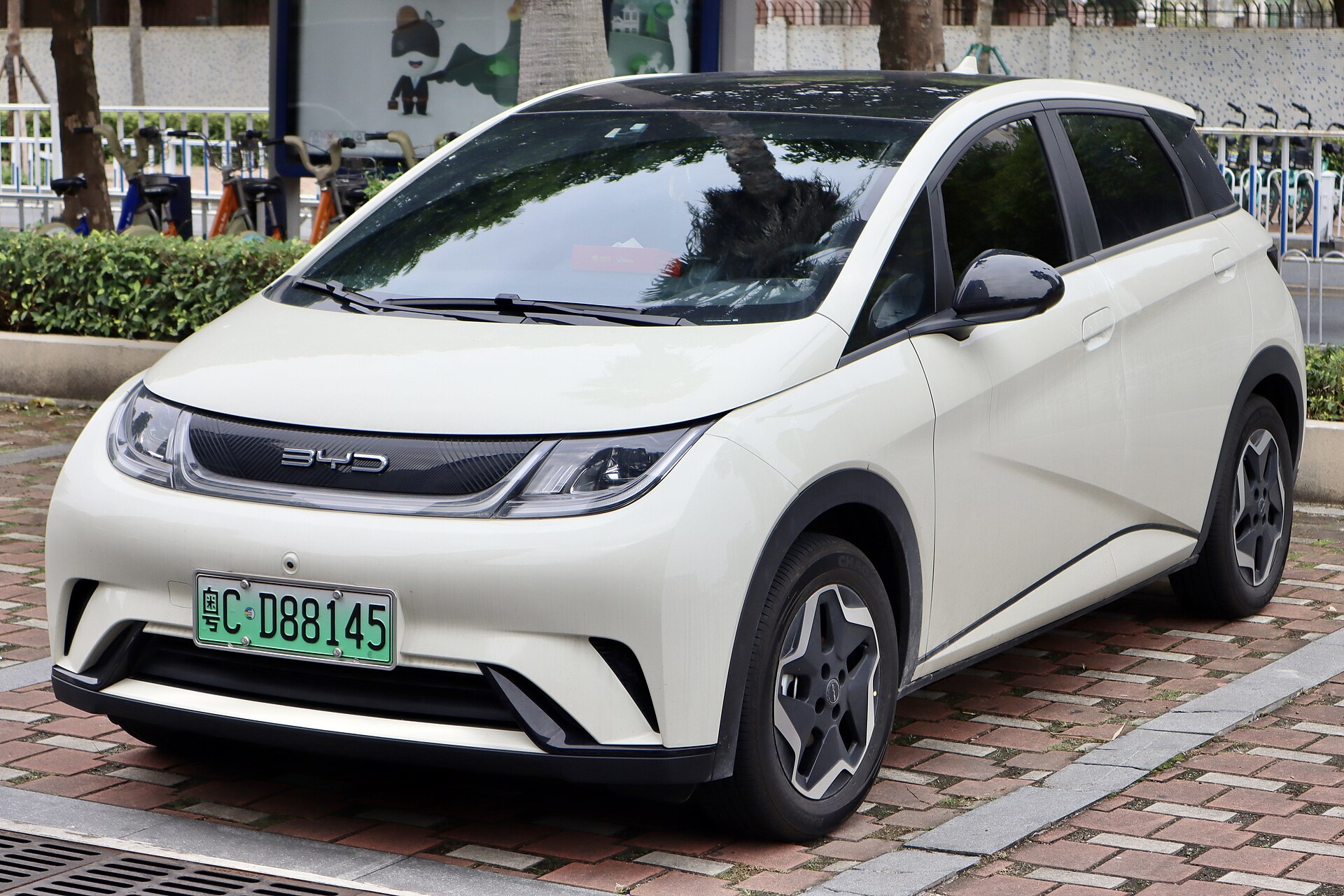
Fix the country, steering side and import route
Southeast Asia is not one vehicle market. Left- or right-hand drive, whole-vehicle approval, new or used eligibility, import support, local-production conditions, taxes and registration documents are national matters. State the final country and city, importer of record, vehicle condition, arrival date and use, then obtain current confirmation from the transport, customs, standards and energy bodies.
One name may cover a left-hand-drive China car, a right-hand-drive export and a locally assembled version. Inlet, lamps, software, airbags, battery, tyres and part numbers may differ. Require VIN-linked origin, build date, configuration code, data plate, certificates and current photographs. Local-production support or approval in one member state does not automatically transfer to an imported car in another.
Test through heat, humidity, heavy rain and standing water
A compact footprint suits congested streets, mall parking and short commutes, but monsoon conditions expose another risk set. Test working payload over damaged surfaces, speed humps, heavy rain, standing water, gradients and slow traffic. Record air-conditioning dehumidification, visibility, braking, tyre drainage and underbody contact. A brief dry-weather drive cannot replace seasonal validation.
Follow the manufacturer's written wading limit; an EV is not a deep-water vehicle simply because it has no engine air intake. Inspect battery shielding, underbody connectors, door and harness sealing, cooling, corrosion protection, loaded clearance and recovery method. After material water exposure, the operator needs a high-voltage inspection and quarantine decision process.
Configure charging to the destination standard
ASEAN guidance provides regional policy direction, while members administer charging approval. Singapore elevated TR25 to SS 722 in 2026 with transition arrangements, and Malaysia has its own 2025 EVCS guidelines. Identify vehicle inlet, AC and DC voltage, communication, supplied cable, charger type approval, installation and periodic-maintenance requirements for the destination.
A matching inlet does not guarantee that account, payment and software work. Use a sample car at condominium, office, mall, fleet and routine highway locations. Record power, hours, parking fee, queuing, fault support and operation in rain. Avoid uncertified adapters, and do not assume equipment compliant in one member state can be installed unchanged in another.
Put condominium parking and distribution before the car
Many urban buyers live in condominiums or use shared parking, so an inlet does not create a chargeable bay. Confirm an assigned space, management or owners' approval, utility conditions, distribution capacity, earthing, protection, fire provisions, metering, cost allocation, communications and maintenance responsibility before deciding whether overnight charging is sustainable.
A fleet site should be designed from shifts and return state of charge rather than by buying the highest-powered equipment. Calculate each vehicle's parking window, simultaneous sessions, transformer margin and outage response, and compare several lower-power units with a few fast chargers. Canopies, drainage, cable routing and impact protection are basic tropical-site requirements.
Lock the safety rating to the regional delivery car
ASEAN NCAP updated several protocols for its 2026-2030 cycle. Read any result with test year, market and specification. Compare electronic stability control, side and curtain airbags, child-seat anchors, autonomous emergency braking, motorcycle and pedestrian detection, blind-spot functions and the necessary sensors with the units being delivered.
UN R100 and UN GTR 20 help describe electric-powertrain and energy-storage safety, but do not complete national admission. Certificates must cover the relevant type, variant and production range. Acceptance should include post-crash high-voltage isolation, post-water-exposure instructions, tyres, brakes, tell-tales and rescue information. Electric propulsion is not a substitute for occupant and vulnerable-road-user protection.
Demonstrate local language, software and parts
Southeast Asia spans many languages and mobile-service environments. In the destination, test menus, input, navigation, voice, map updates, mobile application, charger search, remote cooling, account registration and software updates. A feature dependent on a Chinese mobile number, unavailable application store or restricted server should be removed from the deliverable list or marked unavailable.
The local responsible entity should provide stock and lead times for tyres, glass, suspension, air conditioning, charging modules, 12-volt batteries, cooling and high-voltage parts, plus working diagnostic accounts, service information, insulated tools and technicians. Warranty wording should name the local legal entity, labour, recovery, water and modification exclusions, claims path and software-support term.
Use a monsoon-spanning pilot to decide expansion
Landed cost includes vehicle, origin movement, sea freight, insurance, port charges, tax, inspection, storage, approval, registration, charging works, building charges, initial parts and financing time. If import support depends on local production, investment commitment or a time window, a destination professional must confirm eligibility. Do not insert a policy headline into a return calculation.
Operate the first cars in the target city through representative heat, humidity and heavy rain. Record distance, energy, dehumidification, charge success, outages, water diversions, underbody and tyre wear, faults, parts and downtime. Wrong steering or approval, no condominium charging right, an unworkable wet-season route, a mismatched safety trim or no critical-part path should stop expansion.
Put charging governance and incident recovery into operations
A completed condominium or fleet installation still needs operating rules for bay booking, overstays, electricity settlement, user identity, fault reporting, periodic inspection, software accounts and equipment updates. The procurement contract should divide responsibility among the vehicle supplier, charging-equipment provider, property manager and electrical contractor. Without named ownership, a routine charging failure can leave each party pointing to another while cars remain idle. Keep a site log of failed sessions, protective-device trips, water ingress, communication outages and repair closure so repeated faults can be separated from vehicle problems and future capacity decisions rely on evidence.
Monsoon incident recovery should predefine towing, a quarantine area for water-exposed vehicles, qualified high-voltage inspection, insurer notice and damaged-battery storage. Rehearse dispatch when a public site closes, a basement car park floods or mobile data fails. A fleet without a safe recovery path is not operationally resilient, even if its normal-day energy cost is attractive. Record each exercise, owner, response time and unresolved dependency for the next operating review.
Frequently asked questions
Should every Southeast Asian market receive right-hand-drive EVs?
No. Steering position and admission are country-specific and must be confirmed against each quoted VIN and configuration.
Does a condominium parking bay guarantee charger installation?
No. Management approval, electrical capacity, protection, fire, metering, communications and maintenance must all be feasible.
Can an EV wade deeper because it has no engine air intake?
Do not infer that. Follow the manufacturer's limit and verify battery shielding, sealing, isolation and the post-exposure process.
Does an ASEAN NCAP rating transfer to a same-name China version?
Not automatically. Test year, market, steering position, body and safety equipment must match the delivered car.
How should local infotainment be verified?
Use destination mobile numbers and accounts to test language, maps, application, charger search, remote cooling and updates as acceptance items.
Sources
- Trends in electric cars - Global EV Outlook 2026International Energy Agency · 2026-07-14
- ASEAN Guidelines on Light Electric VehiclesAssociation of Southeast Asian Nations · 2026-07-14
- Singapore elevates national EV charging standard to SS 722Land Transport Authority of Singapore · 2026-07-14
- Guidelines on Electric Vehicle Charging System 2025Energy Commission of Malaysia · 2026-07-14
- New Updates in ASEAN NCAP 2026-2030 Assessment and Test ProtocolsASEAN New Car Assessment Programme · 2026-07-14
- EV, HEV and FCUnited Nations Economic Commission for Europe · 2026-07-14