Global PHEV procurement · Latin America
Chinese PHEV Sourcing for Latin America: Approval, Charging and Market Evidence
Use this guide to turn “Chinese PHEV Sourcing for Latin America: Approval, Charging and Market Evidence” into a documented decision on the exact vehicle, destination acceptance, sample test and contract responsibility before payment.
Opening
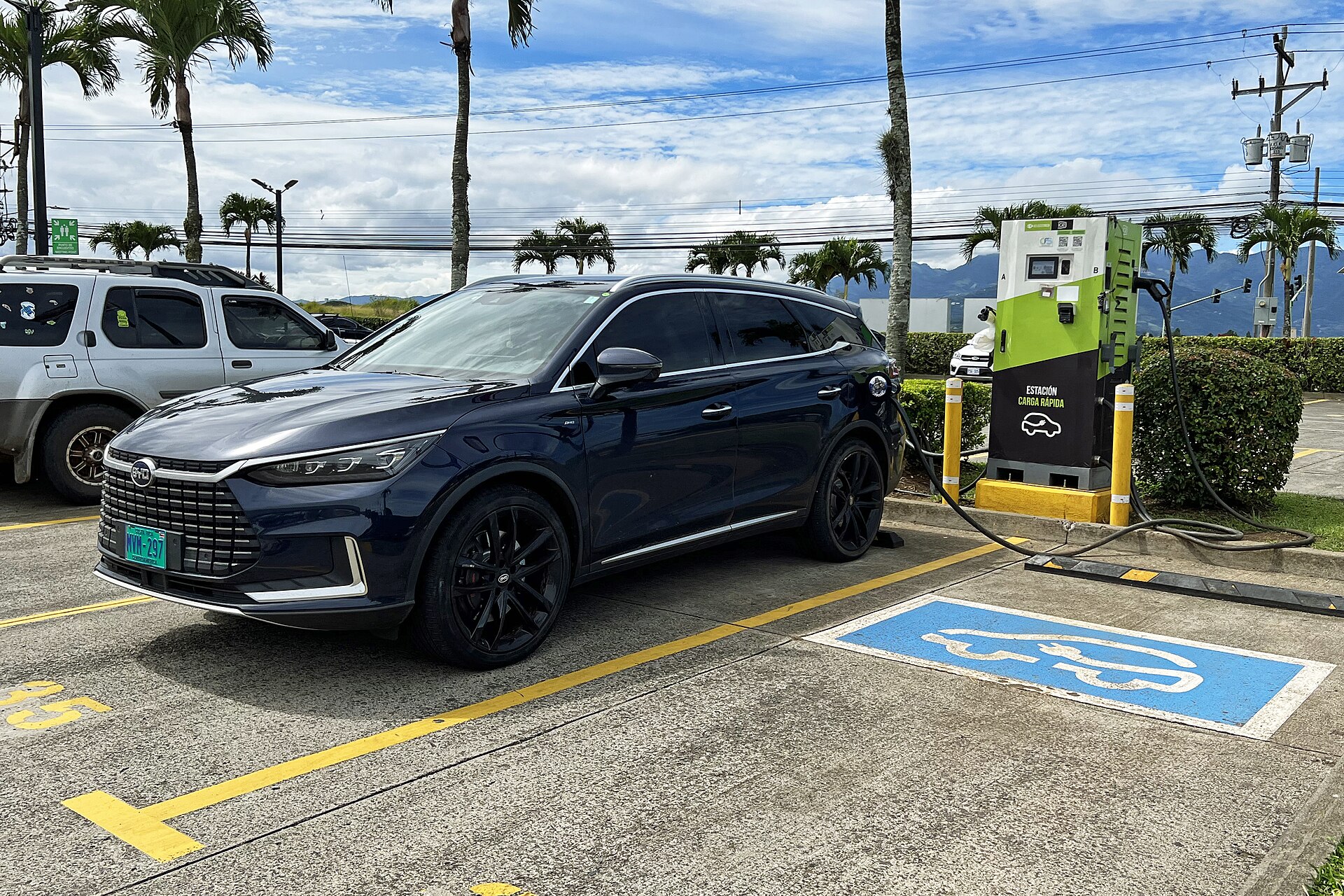
A buyer sourcing a Chinese PHEV for Latin America should choose the destination country first, then verify homologation, emissions/energy evidence, charging interoperability, safety-rating scope and the exact after-sales chain. Latin America is not one PHEV rulebook. The commercial mistake is to compare a China-market electric-range headline, a Brazilian efficiency label and a Chilean charging environment as if they describe the same vehicle in the same legal market. They do not. This distinction matters because an export page is useful only when the buyer can trace a statement back to the exact market, version and evidence that supports it. A polished specification table is not enough if its rows come from different countries or model years.
Verified evidence used in this page
The evidence below is deliberately narrow. Brazil PBEV 2026 includes PHEV models and publishes energy-efficiency/electric-range data under the Brazilian program and test basis. Chile SEC operates an interoperability framework and 2026 instructions for public EV charging information; connector and charging-network compatibility is a local infrastructure issue. Latin NCAP safety ratings are tied to its published protocols and the evaluated model/variant scope; do not transfer a rating to another derivative without evidence. Notice how each statement carries a market or testing boundary. That is the boundary the published page should preserve.
Pre-payment verification
Before payment, build a file that covers: exact VIN and derivative identity; source market and model-year boundary; destination-country approval and registration path; charging inlet, onboard charging power and local interoperability; powertrain, drivetrain and test-cycle basis; independent safety-rating scope for the exact variant/build; parts, workshop, diagnostics, software and warranty continuity; official documents, dates and source URLs used for each claim. Ask for photographs or documents that can be tied to the VIN where appropriate. Reconcile mileage, build date, derivative codes and visible equipment with the written offer. If a key field changes between the quotation and physical vehicle, stop and re-check rather than treating it as a minor editorial difference.
Conclusion
Chinese PHEV Sourcing for Latin America should be treated as an evidence-matching problem. The buyer does not need every possible fact; the buyer needs the right facts for the exact vehicle and destination. A buyer sourcing a Chinese PHEV for Latin America should choose the destination country first, then verify homologation, emissions/energy evidence, charging interoperability, safety-rating scope and the exact after-sales chain. Latin America is not one PHEV rulebook. If the evidence cannot support that chain, the responsible conclusion is 'not yet verified,' not a guessed answer.
Map the countries before selecting an adapter
Latin American vehicle fleets reflect European, North American, Japanese, Chinese and domestic supply chains. Depending on age and origin, vehicles may carry Type 1, Type 2, CCS1, CCS2, CHAdeMO or GB/T. Similar household electricity practices in two countries do not establish the same public fast-charging connector, product approval or operating rules. A regional label is therefore too broad for a purchase decision.
Turn a regional opportunity into one registration case
Start with the importing country, legal importer, vehicle category, new or used status, private or commercial use and place of registration. Chile states that an EV must pass its public vehicle control and certification process; Brazil requires a manufacturer or importer to pursue homologation for the make, model and version; Colombia maintains its own homologation procedure. An approval from a neighbouring market does not replace any of these paths.
Freeze the scope before comparing 1: FOB vs CIF vehicle quotes for Latin America: compare through registration
For “FOB vs CIF vehicle quotes for Latin America: compare through registration”, the scope boundary is tested against the direct record International Chamber of Commerce — Incoterms 2020 Checklist and Flowcharts — https://library.iccwbo.org/content/clp/Others/incoterms_2020_checklist_2024-update.pdf. The working question is “FOB vs CIF vehicle quotes for Latin America: compare through registration”. The staged evidence note limits this source to the following point: The maritime scope and delivery, carriage and insurance allocation of FOB and CIF, plus FCA guidance for containers. The buyer records issuer, date, applicable country, exact vehicle or shipment, original language and independent lookup result. Anything outside that boundary remains an open assumption and cannot support payment, loading or final approval. Put the destination country, discharge terminal, importer of record, expected declaration date, final registration city and handover point on page one. Pacific, Caribbean and Atlantic gateways can involve different sailings and transshipment, so “CIF Latin Ame Do not infer that it does. Import clearance and taxes are normally separate destination obligations unless the contract and local law expressly allocate them. The answer must be tied to the exact VIN, destination rule an
Frequently asked questions
Are a PHEV and a range-extended EV always the same thing?
Confirm the exact VIN and dated manufacturer evidence before payment. This check belongs to “Chinese PHEV Sourcing for Latin America: Approval, Charging and Market Evidence”.
Can electric-range figures from different test cycles be ranked directly?
Compare the same derivative and destination rule before ranking candidates. This check belongs to “Chinese PHEV Sourcing for Latin America: Approval, Charging and Market Evidence”.
Does a UN E mark allow export and registration anywhere?
Test a representative unit and retain the measured result with its conditions. This check belongs to “Chinese PHEV Sourcing for Latin America: Approval, Charging and Market Evidence”.
Does a brand-new PHEV still need independent inspection?
Assign the unresolved cost, delay and responsible party in the purchase contract. This check belongs to “Chinese PHEV Sourcing for Latin America: Approval, Charging and Market Evidence”.
Sources
- Global EV Outlook 2026 - Trends in electric carsInternational Energy Agency · 2026-07-16
- Agreement on Technical Barriers to TradeWorld Trade Organization · 2026-07-16
- UN GTR No.22: In-vehicle Battery Durability for Electrified VehiclesUnited Nations Economic Commission for Europe · 2026-07-16
- Used Vehicles and the Environment: Update and Progress 2024United Nations Environment Programme · 2026-07-16
- Conformity assessment proceduresWorld Trade Organization · 2026-07-16
- Plug-In Hybrid Electric VehiclesU.S. Department of Energy Alternative Fuels Data Center · 2026-07-16