Cross-border vehicle procurement
RoRo or Container Shipping to Africa? Compare Total Vehicle-Delivery Risk
Use this guide to turn “RoRo or Container Shipping to Africa? Compare Total Vehicle-Delivery Risk” into a documented decision on the exact vehicle, destination acceptance, sample test and contract responsibility before payment.
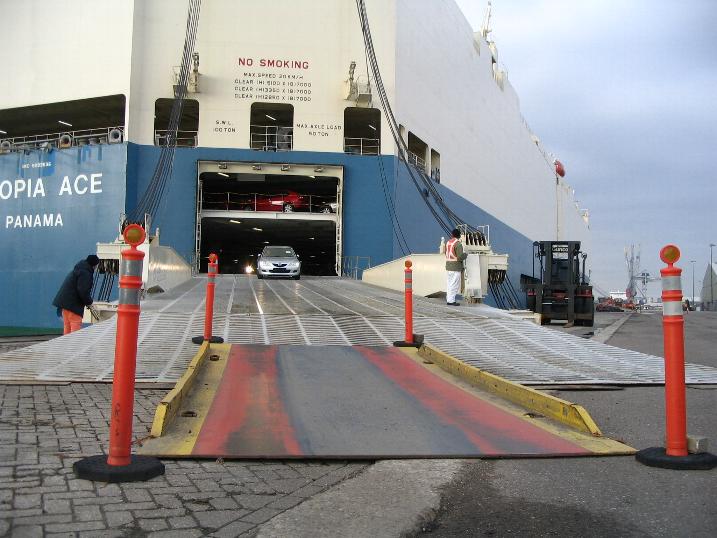
RoRo or Container Shipping to Africa? Compare Total Vehicle-Delivery Risk
RoRo is not always cheaper, and a container is not automatically safer. The right shipping mode depends on the exact vehicle, departure and arrival ports, carrier acceptance, inland legs, loading engineering, cargo security and the buyer’s ability to document damage. An importer should compare the complete delivery chain from supplier yard to destination handover, not just one ocean-freight line in a quote.
Start with the route that actually exists
Ask for the proposed port pair, sailing type, transshipment, cut-off, vehicle acceptance rules, destination terminal, free-time assumptions and inland handover. A mode with a lower ocean rate can become more expensive if it requires an additional inland move, special terminal handling, a longer transshipment route or a port that is inconvenient for the final destination.
Do not assume that every African port accepts both modes for every vehicle. Confirm the current carrier/terminal rule for the exact dimensions, running condition, fuel/charge state and any EV or PHEV restrictions before booking.
RoRo reduces packing work but increases exposure to the handling chain
A self-propelled vehicle can be driven on and off a RoRo vessel, which avoids container stuffing and unpacking. That can be efficient for standard running vehicles. The trade-off is that the vehicle passes through a handling chain in which keys, access, terminal moves and condition records matter. The buyer should define who is authorised to drive the vehicle and how odometer, fuel/charge, loose items and condition are recorded at each custody transfer.
For high-value units, create a dated photo set before terminal entry and after destination release. Record VIN, all panels, glass, wheels, roof, interior, odometer and warning lights. That evidence is useful regardless of shipping mode.
A container needs engineering, not just empty space
Container transport can give better physical access control and allow more control over the loading environment, but only if the vehicle is loaded and secured correctly. The IMO/ILO/UNECE CTU Code is a key reference for safe packing and securing of cargo transport units. It is not a vehicle-specific booking approval; the packer still needs a method suitable for the vehicle, container, lashing points and carrier requirements.
Do not improvise wheel chocks, straps or contact points that can damage suspension, tyres, brake lines or battery protection. The loading plan should also consider door opening, tow/recovery access, battery disconnect or transport mode where required, and how the vehicle will be removed if it cannot drive on arrival.
VGM and cargo information are operational gates
For packed containers, SOLAS verified gross mass requirements mean the shipper must provide a verified gross mass before loading according to the applicable process. A vehicle buyer should therefore have reliable vehicle weight and packing data, not an estimate copied from a different trim. IMO cargo-securing guidance also reinforces that safe stowage and securing are part of the transport system, not a paperwork afterthought.
For EVs and PHEVs, confirm the carrier’s current dangerous-goods, battery-state and incident-handling rules. These rules can change and may differ by line and route, so they must be rechecked at booking time rather than frozen in an evergreen article.
Compare damage, delay and claims—not only freight
Build a route comparison that includes origin trucking, terminal fees, loading/packing, lashing, ocean freight, transshipment, destination handling, storage/free time, customs examination risk, inland delivery, insurance conditions and expected downtime. Also compare the evidence quality available if a vehicle arrives damaged.
The best mode can differ by shipment. RoRo may be sensible for running standard-size vehicles on a direct route with strong terminal procedures. A container may be preferable when controlled access, consolidation, special routing or protection from handling exposure matters more, provided the load can be engineered safely.
Pre-booking checklist
Exact VIN, dimensions and running condition confirmed Current carrier/terminal acceptance confirmed Port pair and transshipment route confirmed Origin/destination handling and inland legs priced Condition-photo protocol defined
Container loading/lashing plan approved when applicable
Verified gross mass responsibility defined for container EV/PHEV carrier battery rules rechecked at booking Insurance and claim evidence requirements understood
Conclusion
The decision is not RoRo versus container in the abstract. It is which verified route delivers the exact vehicles with the lowest combined cost of handling, delay, damage and claim uncertainty.
What must be fixed before requesting a quote? — RoRo versus container vehicle shipping
Fix the destination, importer, exact vehicle version, quantity, operating task, route and evidence date. A quote without those boundaries cannot be compared reliably. For the destination African market, convert this answer into a written acceptance criterion before requesting a final quotation. The file should identify the exact VIN or derivative, original sales market, build date, evidence issuer and date, and the destination rule being applied. Record what remains conditional instead of treating a model name, seller label or undated screenshot as proof. A second reviewer should be able to reproduce the conclusion from the saved documents without relying on the salesperson’s explanation.
Frequently asked questions
What must be fixed before requesting a quote? — RoRo versus container vehicle shipping
Confirm the exact VIN and dated manufacturer evidence before payment. This check belongs to “RoRo or Container Shipping to Africa? Compare Total Vehicle-Delivery Risk”.
Which evidence is not sufficient on its own? — RoRo versus container vehicle shipping
Compare the same derivative and destination rule before ranking candidates. This check belongs to “RoRo or Container Shipping to Africa? Compare Total Vehicle-Delivery Risk”.
When should the buyer run a sample? — RoRo versus container vehicle shipping
Test a representative unit and retain the measured result with its conditions. This check belongs to “RoRo or Container Shipping to Africa? Compare Total Vehicle-Delivery Risk”.
Which findings should stop payment or shipment? — RoRo versus container vehicle shipping
Assign the unresolved cost, delay and responsible party in the purchase contract. This check belongs to “RoRo or Container Shipping to Africa? Compare Total Vehicle-Delivery Risk”.
Sources
- Verification of the gross mass of a packed containerInternational Maritime Organization · 2026-07-16
- Safe transport of containersInternational Maritime Organization · 2026-07-16
- UN Vehicle RegulationsUnited Nations Economic Commission for Europe · 2026-07-16
- Used Vehicles Inspection and Monitoring FrameworkUnited Nations Environment Programme · 2026-07-16
- Cargo Securing and PackingInternational Maritime Organization · 2026-08-26
- Incoterms 2020 Checklist and FlowchartsInternational Chamber of Commerce · 2026-08-26
- Customs valuationWorld Trade Organization · 2026-08-26
- Logistics Performance Indicators 2.0World Bank · 2026-08-26