Buyer logistics guide · the Middle East
RoRo or container shipping to the Middle East: gateway, climate and conformity checks
Choose the shipping mode only after destination, cargo condition, route, documents, handling responsibilities and full landed-cost scope are explicit.
Fix destination and responsibility
Start with the named destination, importer of record, quantity, vehicle condition, VIN policy, departure port and final delivery point. Use the Gulf gateway, heat-exposed storage, any re-export leg, and the final country of registration to assign the responsible party before booking. RoRo or container is only a transport mode; it does not decide admissibility, tax, registration, insurance scope or who pays destination charges. Put every assumption in the request for quotation.
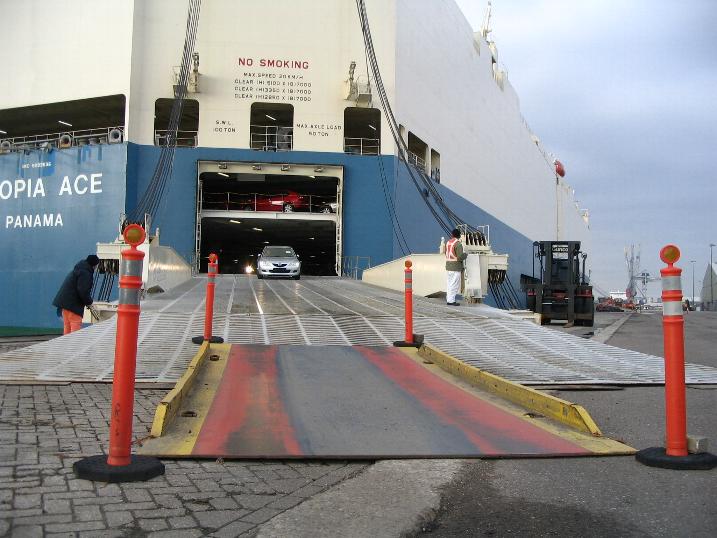
RoRo can fit a running vehicle when the carrier and terminal accept its condition, dimensions and cargo rules. Test the quote against the Gulf gateway, heat-exposed storage, any re-export leg, and the final country of registration, especially where ocean carriage hands off to inland delivery. Ask how keys, battery state, loose items, alarms, immobilisers and non-running vehicles are handled. A published sailing description is not proof that a particular vehicle is accepted.
Choose RoRo after cargo acceptance
A container can provide a controlled unit for one vehicle or several, but confirm internal dimensions, ramp angle, lashing points, dunnage, ventilation, access, loading photographs and unloading equipment. Keep the Gulf gateway, heat-exposed storage, any re-export leg, and the final country of registration in the document checklist because carrier acceptance does not settle destination admission. Carrier, packer and terminal responsibilities may differ. A quote without a packing plan is not comparable.
Compare offers on one scope: vehicle, inland haulage, export clearance, terminal handling, ocean freight, insurance, documents, destination handling, customs broker, duties, taxes, storage, demurrage, delivery and unloading. Price the Gulf gateway, heat-exposed storage, any re-export leg, and the final country of registration separately so a low freight line does not conceal handling or compliance exposure. Request currency, validity, inclusions, exclusions and the event that changes each estimate.
Build a checkable container plan
IMO guidance requires verified gross mass for a packed container before loading, using an accepted method. Escalate unresolved points about the Gulf gateway, heat-exposed storage, any re-export leg, and the final country of registration to the destination broker before payment. Name the party supplying the mass, retain the signed record and ensure vehicle, dunnage and container tare are represented. Weight evidence does not replace clearance or cargo insurance.
Match VIN schedule, invoice, condition, keys, accessories, export records, bill of lading, insurance certificate and handover photographs. Use the Gulf gateway, heat-exposed storage, any re-export leg, and the final country of registration to assign the responsible party before booking. State the inspection point, claim notice process, time limits, exclusions, evidence standard and remedy before movement. Carrier terms can limit recovery.
Compare full landed cost
Regional planning must reflect different port systems, legal regimes, carrier practices, and buyer responsibilities across continents. Test the quote against the Gulf gateway, heat-exposed storage, any re-export leg, and the final country of registration, especially where ocean carriage hands off to inland delivery. A broker should confirm import eligibility, type approval, steering side, lamps, emissions or energy rules, age rules, tax basis, temporary admission and registration evidence for the actual destination. A neighbouring country is only a question list.
Use a staged decision: first confirm entry and registration; next compare route and handling risk; then validate landed cost; finally release payment against documents and an agreed inspection record. Keep the Gulf gateway, heat-exposed storage, any re-export leg, and the final country of registration in the document checklist because carrier acceptance does not settle destination admission. A low ocean line item is not a saving if storage, rehandling or compliance exposure rises.
Keep weight, condition and documents aligned
Before booking, request the named service, cut-off dates, transshipment points, free-time terms, cargo acceptance conditions, claims channel and emergency contact. Price the Gulf gateway, heat-exposed storage, any re-export leg, and the final country of registration separately so a low freight line does not conceal handling or compliance exposure. Ask what happens after a missed sailing, port change, customs hold or damaged lashing. Record answers in the purchase file.
After arrival, preserve the chain from terminal release through customs, inland delivery and handover. Escalate unresolved points about the Gulf gateway, heat-exposed storage, any re-export leg, and the final country of registration to the destination broker before payment. Photograph seals and condition where relevant, check VIN and documents, and keep charge receipts. Shipping completion is not proof that the vehicle is legal to drive.
For the Middle East, record the gateway port, hot-weather storage exposure, inland border or re-export leg, and the final country of registration as separate milestones. Regional standards information can frame questions, but the importing authority must confirm the vehicle, documents and conformity route for the actual destination.
The quote should also identify whether the vehicle is cargo, personal property, dealer stock or fleet equipment, because that classification can change the document path and the questions asked by the destination broker. Use the Gulf gateway, heat-exposed storage, any re-export leg, and the final country of registration to assign the responsible party before booking. Keep commercial assumptions separate from facts confirmed by a carrier, terminal, authority or insurer.
A useful purchase file contains the signed quotation, route map, responsibility matrix, vehicle schedule, inspection record, weight record where applicable, insurance terms, bill of lading, customs instructions and delivery receipt. Test the quote against the Gulf gateway, heat-exposed storage, any re-export leg, and the final country of registration, especially where ocean carriage hands off to inland delivery. Version each document against the same VIN so a later substitution cannot quietly change the risk allocation.
Where a carrier or broker says a requirement is not applicable, ask for the basis, the destination authority or tariff reference, and the responsible party. Keep the Gulf gateway, heat-exposed storage, any re-export leg, and the final country of registration in the document checklist because carrier acceptance does not settle destination admission. Mark unresolved items as conditions to booking or payment. This preserves a clear decision trail without inventing a price, transit time, legal conclusion or service promise.
Keep the final decision conditional until the named destination Price the Gulf gateway, heat-exposed storage, any re-export leg, and the final country of registration separately so a low freight line does not conceal handling or compliance exposure. party confirms the specific vehicle and route in writing.
Frequently asked questions
No. Compare the same vehicle, route, handling, insurance and destination-charge scope; a lower ocean line can be offset by exclusions or storage.
No. Protection depends on packing, lashing, handling, condition evidence and carrier terms.
The contract should identify the shipper and responsible party, with the method and signed record retained before loading.
No. The destination authority and broker must confirm admission, conformity, taxes and registration for the actual vehicle.
Buyer decision memo
RoRo or container shipping to the Middle East: gateway, climate and conformity checks should be used as a working decision record, not as a price promise. For this Middle East route task, separate carrier acceptance, port handover, cargo protection and release costs into documents that can be matched to the exact vehicle, supplier, port and final destination. Record what is confirmed, who confirmed it, the source date and the remaining condition before any deposit or shipment release.
The practical stop rule is simple: when the VIN, legal route, inspection scope, landed-cost line or service responsibility cannot be connected to one accountable party, pause the purchase. The terms RoRo and container shipping, Middle East route, roro container shipping middle east, evidence owner, document date, destination authority, route handover, repair path and payment gate are deliberately kept together so this article remains a buyer tool rather than a generic comparison.
Frequently asked questions
What must be confirmed before payment?
Confirm the exact vehicle or shipment identity, legal route, carrier acceptance, port handover, cargo protection and release costs, destination acceptance and the responsible party for every unresolved cost or service item.
Can a brochure settle this purchase?
No. A brochure can describe a model family, but RoRo and container shipping for Middle East route requires VIN-linked documents, dated authority evidence and a route-specific cost record.
When should the transaction pause?
Pause when a seller cannot reconcile identity, inspection scope, destination approval, payment beneficiary or after-sales responsibility in writing.
What makes the final recommendation reliable?
A reliable recommendation names the vehicle, source market, destination, evidence date, document owner and the condition that would reopen the decision.
Sources
- Verification of the gross mass of a packed containerInternational Maritime Organization · 2026-07-16
- UN Vehicle RegulationsUnited Nations Economic Commission for Europe · 2026-07-16
- Review of Maritime TransportUnited Nations Conference on Trade and Development · 2026-07-16
- GCC Standardization OrganizationGCC Standardization Organization · 2026-07-16
- Cargo Securing and PackingInternational Maritime Organization · 2026-08-26
- Incoterms 2020 Checklist and FlowchartsInternational Chamber of Commerce · 2026-08-26
- Customs valuationWorld Trade Organization · 2026-08-26
- Logistics Performance Indicators 2.0World Bank · 2026-08-26