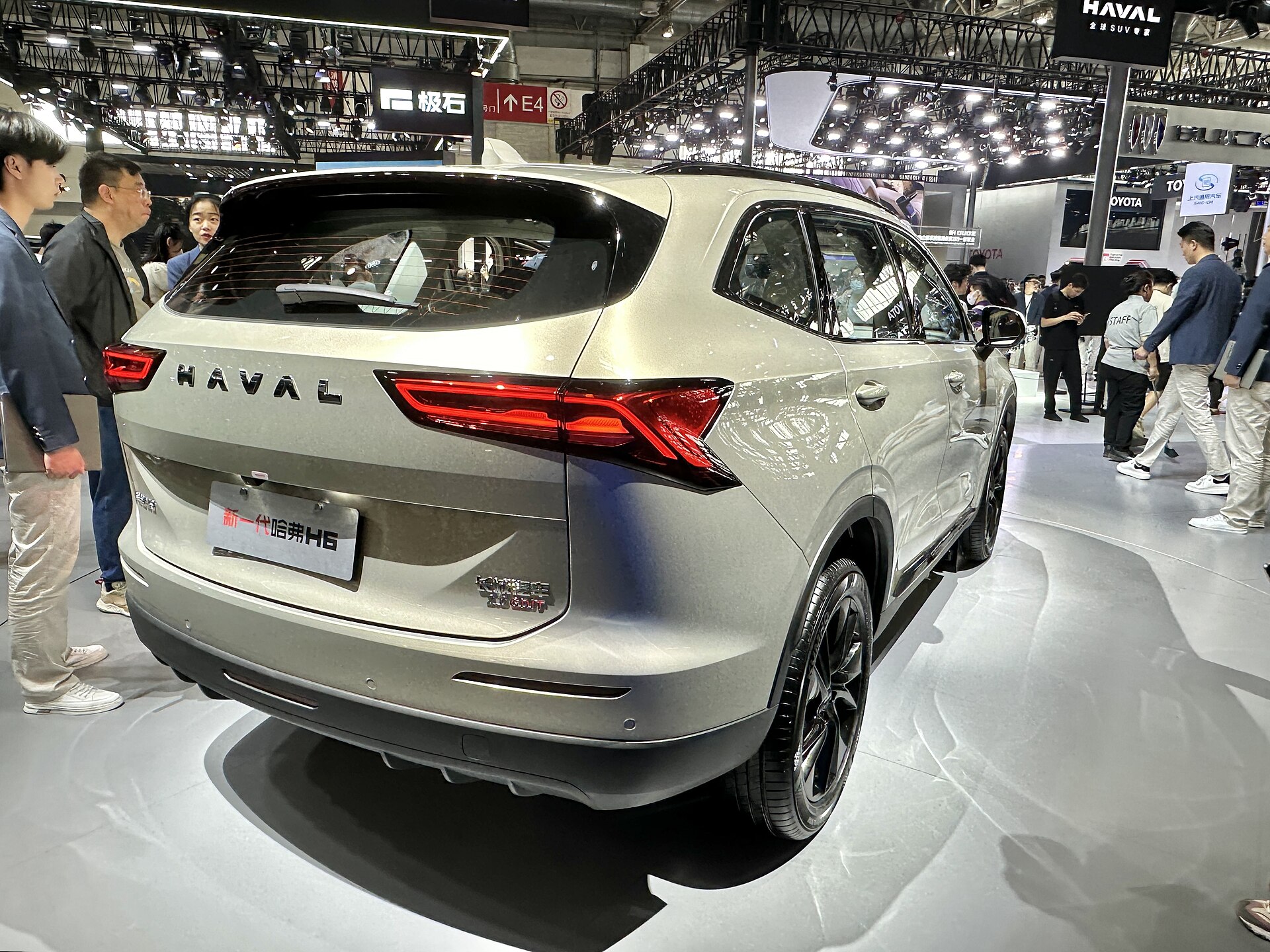
The H6 badge now covers very different energy systems
GWM Australia currently markets Haval H6 petrol, self-charging hybrid and plug-in-hybrid versions. A quote that says only “H6” is therefore incomplete for an export buyer.
Before comparing price, lock the VIN, original market, build date, trim, petrol/HEV/PHEV identity, driven wheels and transmission/hybrid system.
Do not merge headline figures across powertrains
GWM’s current Australian powertrain page advertises the H6 PHEV with up to 106 km electric-only range and more than 1,000 km combined range in the cited market/testing context. Those are PHEV reference claims, not numbers for petrol or HEV versions.
Likewise, fuel-consumption, towing and output claims must remain attached to the exact powertrain and test method.
Charging turns a PHEV into a market-compatibility question
For a PHEV order, photograph the charge port and verify plug standard, AC equipment, supplied cable, battery cooling, software region and destination charging supply. An adapter does not guarantee protocol, voltage or communications compatibility.
If the destination buyer will rarely charge, compare the operational case honestly rather than using an electric-range headline as a universal benefit.
The independent safety scope is unusually useful
ANCAP states its Haval H6 rating applies to petrol, hybrid and plug-in-hybrid variants in the listed Australia/New Zealand scope after additional testing for the electrified variants. That is useful evidence, but it still needs to be matched to body, production period and market equipment.
A safety rating does not by itself prove registration eligibility in another country.
Service planning changes with the powertrain
Petrol needs fuel/emissions and transmission support; HEV adds hybrid battery and high-voltage diagnosis; PHEV adds charging hardware and a larger traction-battery service path. Ask the destination workshop which systems it can actually diagnose and calibrate.
Also check tyres, ADAS glass/camera calibration, collision parts, battery or inverter lead times and software/account continuity.
Buyer decision
The current H6 family gives buyers more choice, but also makes version confusion more expensive. Proceed only when the contract identifies the exact powertrain, drivetrain, battery/charging hardware if applicable, safety scope, destination approval owner and after-sales route.
What the Haval H6 quotation must identify
The H6 name now covers sufficiently different powertrains that the energy system must appear near the top of the quotation. Record VIN, original market, build date, trim, petrol/HEV/PHEV identity, driven wheels and the exact transmission or hybrid system. For a PHEV, add battery information, charge-port type, supplied cable, AC charging capability and the official test cycle behind any electric-only or combined-range claim. GWM Australia’s current reference can demonstrate what is offered in that market, but it should not be used to fill missing information for a China-market or other export unit. Photograph the actual charge inlet, labels, wheels and dashboard once the VIN is allocated and reconcile them with the contract.
Operational support changes materially across the three powertrains. Petrol service centres may be able to handle routine engine and transmission work but not high-voltage diagnosis. HEV adds traction-battery, inverter and hybrid-control systems; PHEV adds external charging hardware and a larger battery-service pathway. Before shipment, identify who can read fault codes, update software, calibrate ADAS after glass/body repairs and safely isolate the high-voltage system. ANCAP’s broad scope across petrol, hybrid and PHEV variants in its Australia/New Zealand record is useful, but it remains an assessment with a defined market and production context, not a global registration approval.
When the H6 evidence is not sufficient
Stop if the seller uses one set of H6 headline figures without identifying the powertrain. Electric-only range belongs to the PHEV context; it cannot be used to describe a self-charging HEV or petrol vehicle. Do not accept an adapter as proof that the charging system is compatible with the destination, and do not assume that a local app, connected service or warranty will work simply because the vehicle is physically similar.
Also pause when the safety claim cannot be matched to the offered build/market equipment or when the destination workshop has no high-voltage or software capability for the chosen system. The buyer does not need every uncertainty to disappear, but unresolved items must be visible. A defensible H6 purchase has one powertrain identity, one set of market-specific performance data, a verified charging/service plan where applicable and a clear destination approval owner.
A buyer should compare the H6 on the intended energy pattern
The best powertrain depends on how the vehicle will actually be used. A petrol H6 avoids external charging dependence but needs destination fuel and emissions support. An HEV can reduce fuel use in the right operating pattern without asking the driver to plug in, while a PHEV only delivers its intended electric-use advantage when the buyer can charge it regularly and the local electrical supply, connector and service environment are suitable. For a fleet, estimate daily distance, charging dwell time, electricity price, fuel price and the proportion of journeys that would realistically fit within the verified electric range. Do not use a PHEV headline range as the whole business case. The procurement file should show why the selected energy system fits the duty cycle and what happens when charging or high-voltage service is unavailable.
Document the final choice in the purchase contract and recheck it when the VIN is allocated.
Frequently asked questions
How do I confirm that a quoted GWM HAVAL H6 is the version described?
Match the VIN, type code, build date, body, powertrain and equipment photos to a manufacturer build sheet and the export title. Resolve every mismatch before a deposit becomes non-refundable.
Which performance or range figures can I use for GWM HAVAL H6?
Use 2. 0T 170 kW / 380 N·m; HEV 179 kW / 530 N·m; PHEV 240-268 kW / 540-760 N·m and 9DCT / DHT / Hi4; HEV / PHEV; 19. 1 kWh PHEV only for the named source-market configuration. Ask for the exact label or certificate and compare test cycles before estimating real use.
Does the cited safety evidence approve GWM HAVAL H6 for my country?
No. The evidence is ANCAP 2022; H6 petrol / HEV / PHEV; destination approval remains a separate VIN-based legal process involving the authority, inspection station and insurer.
What service checks matter before importing GWM HAVAL H6?
Confirm campaign completion, diagnostic access, routine fluids or charging hardware, high-value parts, software region and written lead times with a workshop that will accept the imported VIN.
How should I compare two GWM HAVAL H6 export offers?
Normalize vehicle identity, condition, equipment, documents, Incoterms, freight, taxes, approval costs and first-year service. A lower invoice is not cheaper if configuration or title evidence is incomplete.
Sources
- GWM HAVAL H6 specificationsGWM South Africa · 2026-07-19
- HAVAL H6 brochureGWM Australia · 2026-07-19
- GWM Haval H6 safety ratingANCAP Safety · 2026-07-19
- UNECE vehicle regulationsUnited Nations Economic Commission for Europe · 2026-07-19
- Vehicle recalls databaseAustralian Department of Infrastructure, Transport, Regional Development, Communications, Sport and the Arts · 2026-07-19
- GWM HAVAL H6 global product informationGreat Wall Motor · 2026-08-20