Start with the sales market, not the 2026 label
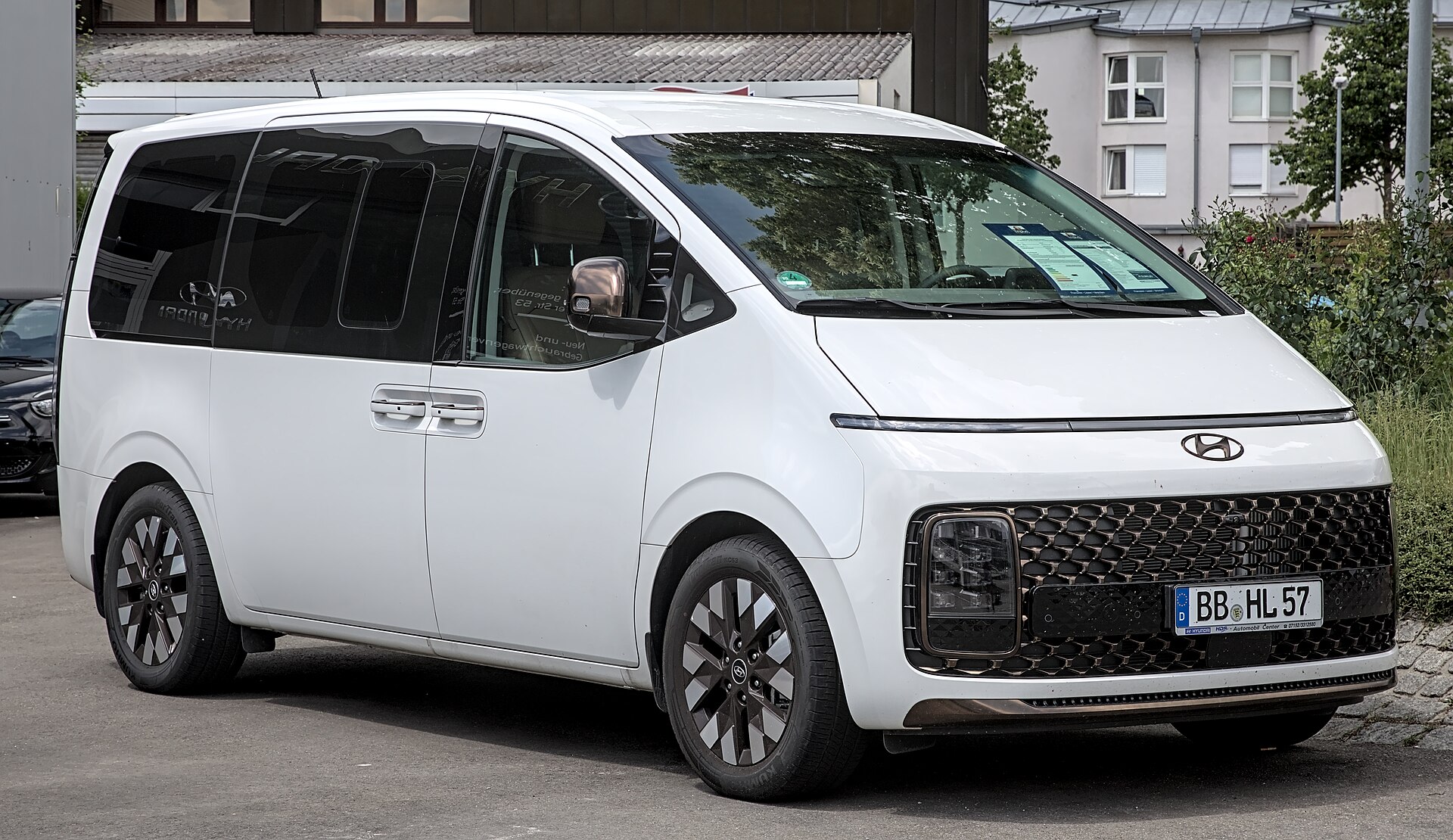
A listing that says only “Hyundai Staria 2026” is not precise enough for an export purchase. Hyundai New Zealand identifies a refreshed 2026 passenger range with hybrid and diesel choices, Hyundai Korea shows a domestic 11-seat LPG Tourer, Indonesia continues to describe a diesel Staria, and Hyundai's electric announcement covers Korea and Europe. Those are parallel market offers, not interchangeable grades of one global catalogue.
Ask the seller for the full VIN, production month, original sales country, exact Korean or Latin-script trim name, seating count, steering side, engine or motor code and a dated factory build sheet. Match those identifiers to the source-market brochure before accepting any specification. A registration year, auction year or seller-created “2026” label must not replace the manufacturer's build identity.
Cabin format changes the commercial case
The Staria's long wheelbase, wide body and sliding doors make it attractive for family transport, hotel transfers and executive shuttles, but the seat plan determines its real use. New Zealand's page distinguishes a seven-seat Hybrid Lounge with second-row captain's chairs from eight-seat diesel versions with a bench. Hyundai's electric launch instead names seven-seat Luxury and nine-seat Wagon forms, while Korea lists an 11-seat Tourer in its domestic range.
Do not calculate payload or luggage capacity by subtracting passengers from a generic figure. On the New Zealand table, all three passenger trims show 809 litres behind the third row, yet kerb mass, gross vehicle mass and towing treatment differ. Require photographs of every seating row, seat rails, belt anchors, child-restraint points and the compliance plate; conversions can change category, tax, inspection and insurance outcomes.
Choose one powertrain branch and keep its numbers together
For New Zealand, the 1.6T hybrid is listed with 180 kW and 367 Nm combined, a 1.56-kWh battery, front-wheel drive and a six-speed automatic. The 2.2-litre diesels are listed at 130 kW and 430 Nm with an eight-speed automatic; Active is front-wheel drive and Limited uses HTRAC all-wheel drive. Even within that one market, towing and fuel figures are trim-specific, so the hybrid's data must not be blended with the diesel's.
Other branches need their own files. Indonesia advertises its current diesel at 177 PS and 430 Nm with an eight-speed shift-by-wire automatic. Korea's July 2026 Tourer evidence names a 3.5 LPG engine, which should not be casually translated into a petrol export specification. The separate Staria Electric announcement specifies an 84-kWh battery, 160-kW front motor and 800-volt charging architecture for Korea and Europe.
Read safety results by tested configuration
ANCAP shows a five-star rating tested in 2021 and applies it to eight-seat petrol and diesel Staria variants, with the rating page showing expiry in December 2027. That is useful evidence for matching Australasian vehicles, but it is not proof that a seven-seat hybrid, nine-seat electric, 11-seat Korean Tourer or an independently converted shuttle carries the same assessment. Preserve the rating's date, market and variant scope whenever citing it.
Equipment also varies by grade. Hyundai New Zealand lists forward-collision, lane, blind-spot and occupant-protection features in a three-column trim table, while Hyundai Indonesia marks some camera-based features as available only on its Signature 7. Verify the installed sensors, airbag labels, child-seat anchors and warning lamps on the actual unit, then check that replacement windscreens and calibration support exist at the destination.
Treat compliance, recalls and support as VIN work
Before payment, send the VIN and source documents to the destination's registration or type-approval authority. Confirm emissions standard, lighting pattern, speed display, glazing marks, seat and belt certification, maximum masses, charging connector if electric, and whether the seating category triggers minibus licensing. A model sold legally in Korea or New Zealand does not automatically qualify in another country, even when the badge looks identical.
Recall clearance is equally vehicle-specific. Search the original market's Hyundai system and official recall authority, repeat the check in the destination, and obtain invoices for completed campaigns. A blank model-name result is not a clean-VIN certificate. Also obtain written answers on grey-import warranty, connected services, navigation, immobilizer keys, diagnostic access, high-voltage support and parts ordering before treating local dealer coverage as available.
Build a quotation that can survive inspection
A useful quotation should identify the VIN, trim, seat count, powertrain, driveline, exterior dimensions, kerb and gross masses, title status, odometer evidence and included keys. Attach underside, roof, door-aperture, charging-port or engine-bay, dashboard-on and cold-start images as appropriate. For the hybrid or electric versions, include a diagnostic battery report and evidence that the supplied charging equipment is compatible with the destination.
Keep vehicle price separate from inland haulage, export documentation, inspection, ocean freight, insurance, destination handling, duty, tax, registration work and any conversion. Do not accept promised stock, delivery time or warranty without documentary support. The Staria can be a strong high-capacity passenger choice, but only when the chosen market version, legal pathway and after-sales plan all describe the same physical vehicle.
Frequently asked questions
Is every Hyundai Staria advertised as 2026 the refreshed model?
No. The label may refer to model year, registration year, auction year or seller wording. Confirm the VIN, build month, original market, trim name and factory build sheet, then match the exterior and equipment to an official market document.
Which 2026 Staria powertrain is best for export?
There is no universal answer. The New Zealand hybrid, New Zealand diesel, Korean LPG vehicle and announced Korea/Europe electric model have different fuel, service, charging, towing and approval needs. Choose only after checking destination rules and support.
Can I apply the five-star ANCAP rating to a hybrid or electric Staria?
Not from the cited rating alone. ANCAP publishes the result for eight-seat petrol and diesel variants tested in 2021. Ask ANCAP or the destination authority for written applicability before attaching that rating to another powertrain or seating layout.
Do the Staria's dimensions stay the same in every market?
Do not assume so. The New Zealand 2026 passenger table alone shows overall length varying from 5,253 to 5,273 mm while width, height and wheelbase remain listed at 1,997, 1,990 and 3,273 mm. Verify the exact body and trim.
What must be checked before sending a deposit?
Obtain VIN and title proof, build sheet, seat and body photographs, inspection history, recall status, battery report where relevant, destination eligibility, written landed-cost components and seller bank verification. Do not rely on a generic specification page.
Sources
- The new STARIA — Korea price and equipment pageHyundai Motor Company Korea · 2026-07-22
- The new STARIA MPVHyundai Motors New Zealand · 2026-07-22
- STARIA HighlightsPT Hyundai Motors Indonesia · 2026-07-22
- Hyundai STARIA Electric Debuts, Setting a New Standard for Spacious, Everyday Zero-Emission MobilityHyundai Motor Company Global Newsroom · 2026-07-22
- Hyundai Staria safety rating and reportAustralasian New Car Assessment Program · 2026-07-22
- Browse all recallsAustralian Department of Infrastructure Vehicle Recalls · 2026-07-22
- Safety recalls databaseNew Zealand Transport Agency Waka Kotahi · 2026-07-22
- Check if a vehicle, part or accessory has been recalledUK Driver and Vehicle Standards Agency · 2026-07-22