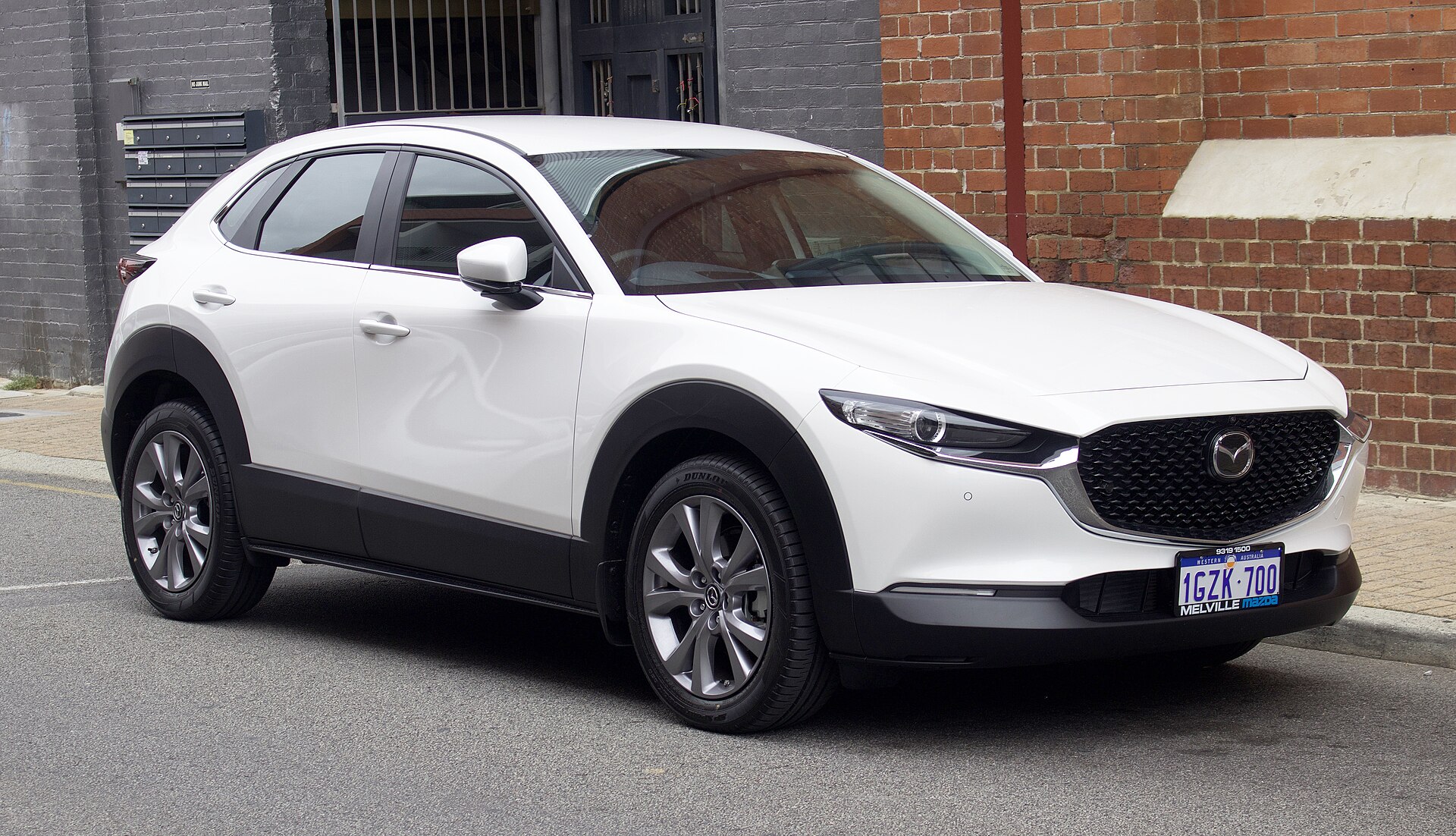
A 2026 search label is not a universal model-year specification
Mazda Australia currently sells the CX-30 and its builder shows current grades, but a buyer should not assume the same engine, equipment or model-year definition applies in every country. Start with VIN, build date, original market and grade.
Keep the existing 2026 URL for continuity if needed, but the visible article should explain that the year label does not create one worldwide specification.
Current Australian evidence is a market reference
5-litre references in the current range. Do not borrow a turbo engine, AWD system or premium feature from another country’s brochure unless the offered VIN is documented as that derivative.
The 2026 ANCAP boundary matters
ANCAP currently states that Mazda CX-30 vehicles built from 1 January 2026 are unrated. A five-star ANCAP rating applies to vehicles built before that date within the older assessment scope. Build date is a safety-evidence field.
Condition and service are as important as specifications
For used or parallel-import CX-30 stock, request cold-start video, dashboard warning sequence, odometer history, tyre condition, underbody, body repairs, keys and diagnostic scan. Check recall status in the relevant original market.
Before export, ask the destination workshop about engine/transmission service, ADAS calibration, windscreen/camera replacement, key programming and infotainment/software region support.
Destination admission remains separate
A current Mazda model in one market can still face different emissions, lighting, steering-side, telematics or documentation requirements in another. Obtain written destination eligibility for the exact type/VIN where required.
Buyer decision
A good CX-30 file should state the reference market, VIN, build date, grade, engine, drivetrain, key equipment, current safety-rating status and service path. If the seller relies on an old safety badge or another market’s specification without proving applicability, stop and resolve the mismatch.
What the CX-30 contract should identify
The CX-30 contract should separate website-search language from vehicle identity. Keep the existing 2026 URL for continuity if the site has already indexed it, but the commercial file should record VIN, original market, production date and the model-year definition supported by that market. Add grade, engine, drivetrain, wheel/tyre package and the ADAS/infotainment equipment that matters to the buyer. Mazda Australia’s current range can be used as an Australian-market reference for Skyactiv-G 2. 0/2. 5-litre availability and grade features, but it should not be used to invent an AWD, turbo engine or premium feature for a different source market. For used stock, include odometer history, keys, tyre condition, warning-light sequence, repair evidence and an original-market recall check where available.
The 2026 ANCAP boundary deserves its own contract note because it directly contradicts a lazy carry-over of an old safety badge. ANCAP currently states that CX-30 vehicles built from 1 January 2026 are unrated under its current record, while the earlier five-star rating applies to the older build scope. Therefore, a buyer should save the build date together with the safety source and avoid displaying an unqualified five-star statement on a 2026-production vehicle. Destination support also matters: verify emissions/lighting/steering-side acceptance, windscreen and camera calibration, key programming, infotainment region and engine/transmission service. A well-documented conventional petrol vehicle can still become expensive if a simple ADAS glass repair or software issue has no local solution.
When the CX-30 evidence is not sufficient
Stop when the seller cannot provide a build date or when the page/quote calls the car “2026” solely because that word appears in the URL. Pause if an older ANCAP five-star graphic is used for a vehicle built on or after 1 January 2026 without acknowledging the current unrated status. Do not borrow a powertrain from another national brochure simply because it is also called CX-30.
The evidence is also weak when grade-specific features, keys, service history or prior damage are unclear on used stock, or when destination conformity is assumed from Australian availability. Proceed after the VIN, build date, source market, grade, engine/drivetrain, current safety status and destination service path are coherent. If an important field remains unknown, keep it visible as unresolved rather than filling it with the most attractive specification available online.
Use current market evidence without turning it into a global specification
The Australian range is useful because it shows that even within one current market the CX-30 can have different grades, engines and equipment. An export buyer should use that evidence to create questions, not to fill blanks automatically. Confirm whether the offered vehicle has the 2. 0-litre or 2. 5-litre petrol engine or another market-specific powertrain, and verify driven wheels, wheel size, infotainment, camera/radar equipment and convenience features from VIN-linked documents or the vehicle itself. The same principle applies to connected services and navigation: regional availability can differ even when the hardware looks identical. If a buyer wants a feature because it affects resale value or fleet operation, write that feature into the contract rather than relying on a family-level webpage.
Keep that evidence with the VIN so the final vehicle can be audited before shipment.
Frequently asked questions
What should be checked first?
Start with the VIN, build date, original sales market, model code and factory equipment record. Confirm the engine and grade on that same CX-30; pause the purchase if the identity documents do not agree.
Why is a model name insufficient?
The CX-30 name can cover different drivetrains, bodies, seats, emissions approvals, safety packages and connected services. A nameplate helps find documents but cannot prove a unit's identity, condition or import eligibility.
Can a published specification be used as a quotation?
No. A published specification is a dated market reference, not evidence of stock, condition, transaction price, freight, tax, warranty or delivery. The purchase needs a VIN-linked contract and supporting records.
What image can be published?
Use a Mazda CX-30 photograph only after the exact derivative is identified and the creator, source page, reusable licence and retrieval date are recorded. Until then, the image remains unresolved rather than being substituted with an unrelated vehicle.
Sources
- 2026 Mazda CX-30 vehicle informationMazda · 2026-08-26
- 2026 Mazda CX-30 packaging releaseMazda · 2026-08-26
- VIN DecoderNational Highway Traffic Safety Administration · 2026-08-26
- Check for RecallsNational Highway Traffic Safety Administration · 2026-08-26
- World Forum for Harmonization of Vehicle RegulationsUnited Nations Economic Commission for Europe · 2026-08-26
- Vehicle ratingsInsurance Institute for Highway Safety · 2026-08-26
- Safety Gate alertsEuropean Commission · 2026-08-26
- Mazda CX-30 Safety Rating and ReportAustralasian New Car Assessment Program · 2026-08-29