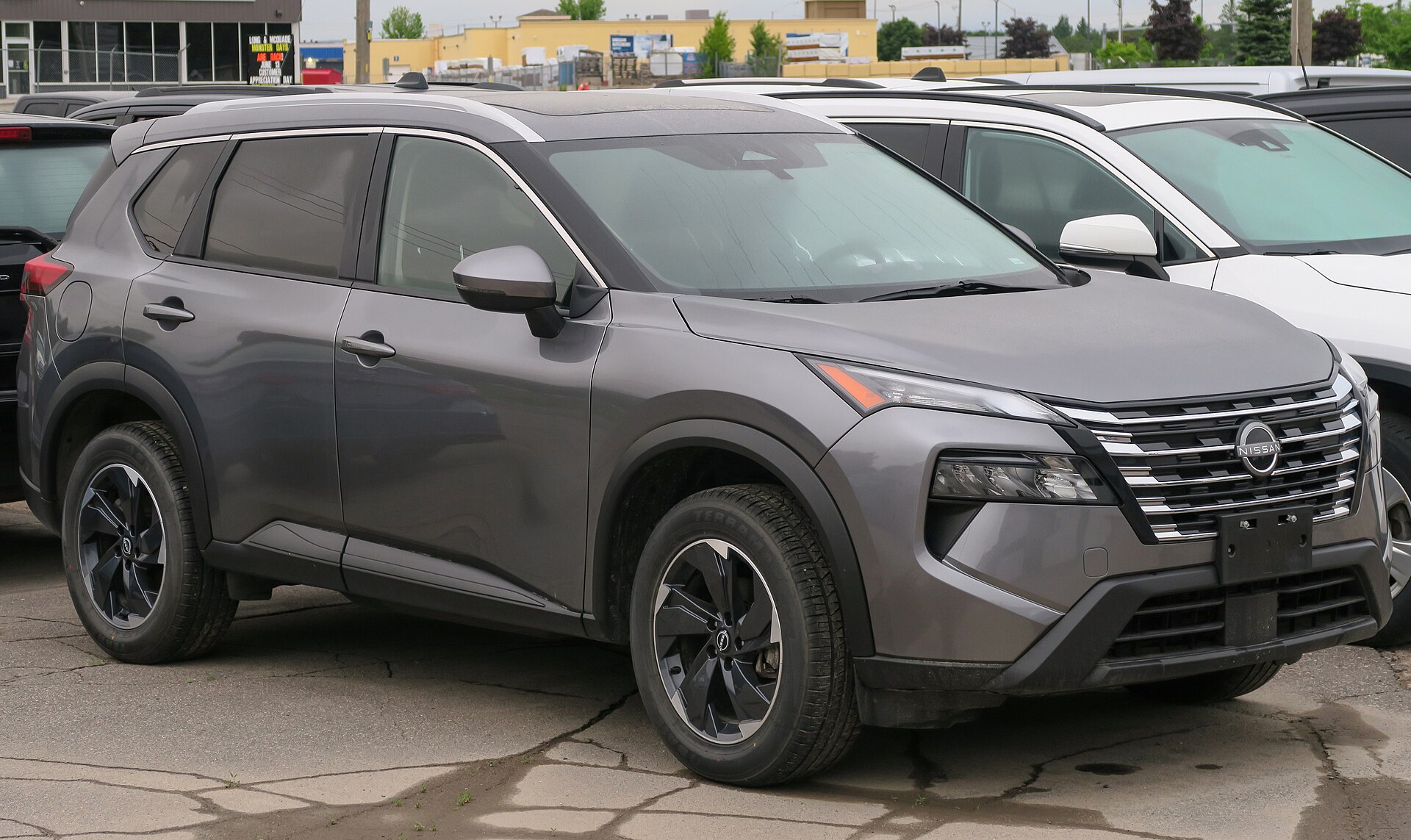
Define the exact Rogue before comparing specifications
The first procurement task is identity, not equipment comparison. Nissan has a U.S. 2026 Rogue brochure and also publishes 2026.5 material, so a seller's phrase such as ‘current Rogue’ is too vague for a contract. Record the complete VIN, production label, original sales market, model-year wording and trim before accepting any specification. This page keeps its historical Rogue/X-Trail URL for continuity, but the confirmed figures below concern the U.S.-market gasoline Rogue. An X-Trail, Rogue Plug-in Hybrid or vehicle from another market needs its own evidence set.
Use the gasoline powertrain figures within their U.S. scope
Nissan's 2026 U.S. brochure describes a 1.5-litre VC-Turbo three-cylinder gasoline engine rated at 201 hp and 225 lb-ft, paired with an Xtronic CVT. Those numbers are useful only after the offered vehicle is shown to be the covered gasoline derivative. They do not establish the output of an X-Trail, a plug-in hybrid or a later configuration. Ask the supplier to place the VIN, engine family, trim and source document on the same quotation; if one field does not agree, pause the comparison instead of choosing the most favourable published number.
Keep FWD and AWD attached to the offered VIN
Front-wheel drive and all-wheel drive are both represented in Nissan's U.S. Rogue material, with availability depending on grade. The drivetrain must therefore remain visible from initial listing through invoice, inspection and shipping documents. A family-level advert that mentions AWD cannot prove that the stock unit has it. Check the factory record, VIN attributes and physical controls, then require a revised quotation if the seller substitutes FWD for AWD or the reverse. This difference affects use, maintenance planning, transport value and possibly destination documentation.
Read safety evidence with its build boundary
IIHS publishes a 2026 Rogue record within its U.S. test scope and notes build-related restraint changes. A safety result should be connected to the exact model year, production context and tested configuration before it appears in a buyer file. NHTSA's selection of the Rogue for 2026 testing is a separate fact and must not be described as a completed score. Neither U.S. source proves registration in another country. The destination authority or licensed broker must decide whether local lighting, labels, restraint documentation and other approval requirements are satisfied.
Treat emissions certification as source-market evidence
EPA documents identify a 2026 Rogue gasoline emissions test group and covered U.S. drivetrain variants. This is useful evidence of the source-market configuration, not a universal emissions approval. Before payment, send the VIN, under-hood emissions label, certificate reference and any required export documents to the destination compliance professional. If local rules require a different standard, test or type-approval record, price that work explicitly. Do not state that the vehicle is compliant merely because it was certified for sale in the United States.
Check service, software and warranty continuity
VC-Turbo service information, diagnostic access, software accounts, maps, connected functions and warranty handling may depend on the original market. Confirm which workshop at the destination can identify the engine and drivetrain, obtain parts, perform recall work and reset relevant systems. Nissan's U.S. ownership pages describe U.S. support, not an automatic international warranty promise. For fleet purchases, a pilot unit can test parts lead time and diagnostic support before the buyer commits to several vehicles with the same configuration.
Inspect a used unit as a vehicle, not a brochure
For a used Rogue, model literature does not establish condition. Request a cold-start video, warning-lamp sequence, diagnostic scan, dated odometer history, service invoices, recall check and photographs of the VIN, production label, body structure, glass, tyres and interior electronics. Review collision and restraint repairs alongside the safety evidence, because a rating cannot prove that a repaired vehicle retains its original condition. The inspection report and media should identify the same VIN and date; generic seller assurances are not a substitute for traceable findings.
Turn unresolved facts into contract conditions
The purchase contract should state the exact model-year designation, gasoline propulsion, trim, FWD or AWD, included keys and accessories, document set and acceptance criteria. Keep freight, insurance, port handling, destination modification, registration and service-risk allowances as separate cost lines rather than inventing a single landed price. Any unresolved identity, safety, emissions, warranty or software point should become a written condition before the non-refundable deposit or final payment. Proceed only when the documents, physical vehicle and destination advice describe the same unit.
Frequently asked questions
Can Rogue and X-Trail specifications be combined?
No. Shared family naming does not prove identical engines, seating, safety equipment or approvals. Use documents for the exact original market and VIN.
Does a 2026 listing prove the vehicle is the brochure version?
No. Nissan also uses 2026.5 naming. Match the VIN, production label, trim and factory record before accepting any specification.
Does U.S. EPA certification permit registration abroad?
No. It documents U.S. source-market emissions scope. The destination authority or qualified broker must confirm local eligibility and modifications.
What should stop payment?
Pause when VIN, model-year label, drivetrain, documents, inspection or destination advice conflict, or when a critical claim cannot be tied to an accessible source.
Sources
- 2026 Nissan Rogue brochureNissan · 2026-09-01
- 2026.5 Nissan Rogue brochureNissan · 2026-09-01
- Nissan Rogue specifications and trimsNissan · 2026-09-01
- 2026 Nissan Rogue ratingInsurance Institute for Highway Safety · 2026-09-01
- 2026 Rogue vehicle detailNational Highway Traffic Safety Administration · 2026-09-01
- 2026 model-year vehicles selected for NHTSA testingNational Highway Traffic Safety Administration · 2026-09-01
- 2026 Nissan Rogue emissions certification applicationUnited States Environmental Protection Agency · 2026-09-01
- EPA certificate TNSXT01.5E3K-023United States Environmental Protection Agency · 2026-09-01
- VIN DecoderNational Highway Traffic Safety Administration · 2026-09-01
- Check for recallsNational Highway Traffic Safety Administration · 2026-09-01
- Nissan ownership and warranty supportNissan · 2026-09-01