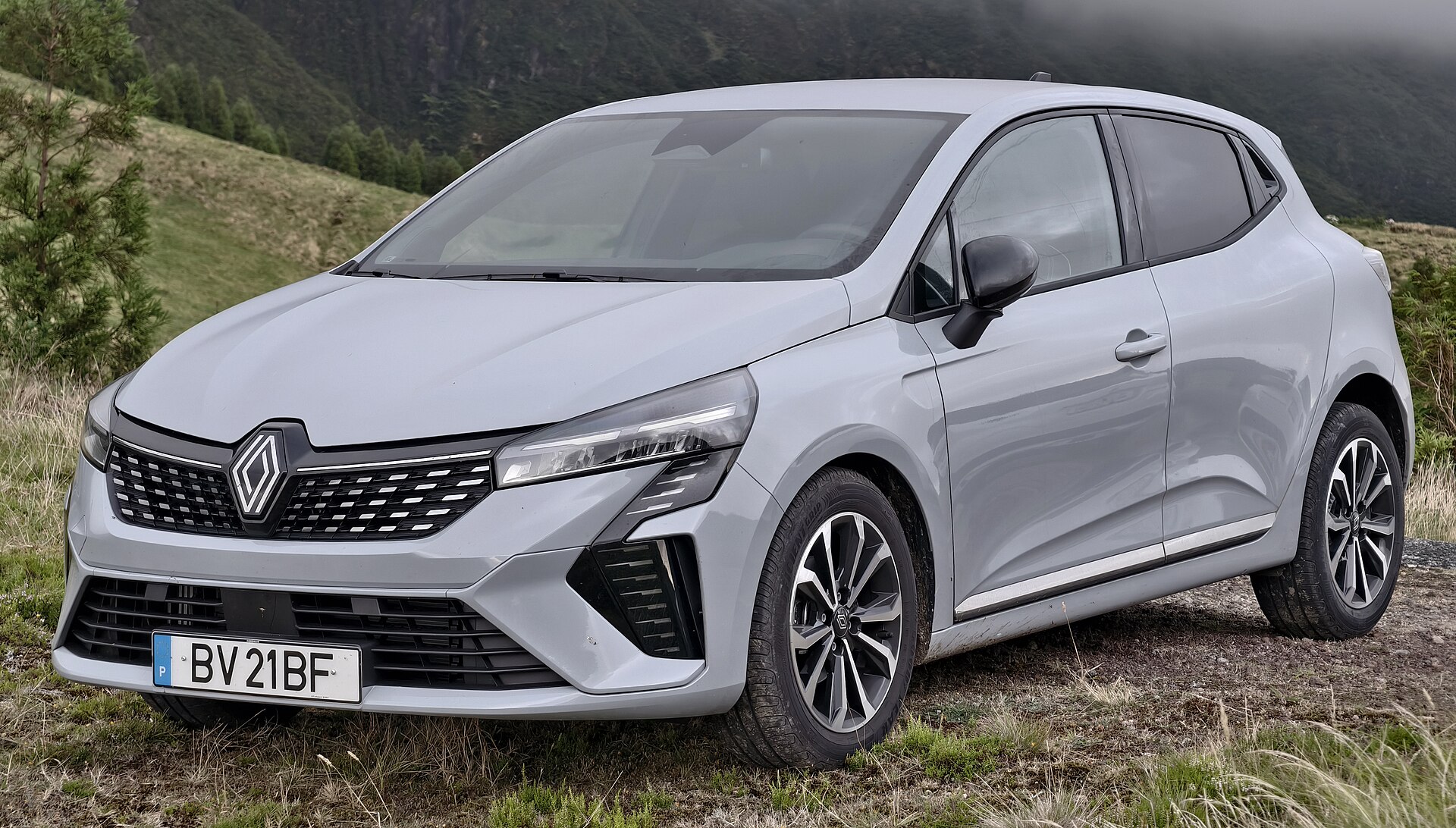
Resolve the generation before accepting a 2026 label
Current search results can mix older Clio E-Tech 145 material, TCe 90 specifications and newer model-year offers. Begin with VIN, build month, generation, market and engine code. Ask for the registration document, build plate and complete option sheet before comparing price. A seller's use of 2026 may describe registration timing, advertisement timing or a source-market model year; it does not prove that every specification belongs to one worldwide Clio. Freeze this identity boundary before using dimensions, safety results or luggage figures.
Test small-car capacity with real objects
The cited UK material describes a five-door hatchback and luggage volume up to 391 litres, or up to 1,069 litres with rear seats folded, depending on version. Hybrid packaging can affect the usable shape. Record cargo-floor length, width between wheel housings, load height and split-seat operation, then compare those measurements with the buyer's weekly load. For urban fleets, include rear-door opening and child-seat access. A nominal litre figure cannot show whether a folded wheelchair, airport cases or delivery crates fit without compromising passengers.
Separate TCe 90 and E-Tech 145 operating plans
TCe 90 and E-Tech full hybrid 145 require different checks. Confirm manual versus multimode automatic transmission, service schedule, diagnostic coverage and parts channels. The hybrid file needs battery-system warnings, health information where available and written warranty territory; the TCe file needs the exact emissions and transmission specification. Route simulation matters: repeated short urban trips, motorway use and steep terrain do not produce the same fuel result. Keep test-cycle claims as reference evidence and calculate the buyer's own energy budget independently.
Read assistance equipment at trim level
Renault material refers to as many as 22 driver-assistance systems, but availability and operating limits depend on trim and option package. Request a VIN-linked equipment printout and photograph the camera, radar, switches and dashboard menus. Test warning lamps and calibration status. A feature name is not proof that the offered car contains the necessary hardware. If replacement windscreens, sensors or calibration services are scarce in the destination, include that risk in maintenance planning instead of assuming every assistance system remains inexpensive throughout the ownership period.
Constrain the expired Euro NCAP result
The 2019 Euro NCAP record lists 96 percent adult, 89 percent child, 72 percent vulnerable-road-user and 75 percent safety-assist results, and its rating is expired. It identifies dated evidence for a defined tested scope, not a blanket 2026 endorsement. Match body generation, powertrain extension, restraint equipment and assistance hardware to the offered VIN. Search official recalls by VIN and keep campaign completion documents. Destination authorities may still require separate compliance for lamps, glazing, emissions, speedometer, security and document language.
Model city-car landed cost beyond freight
A Clio landed-cost sheet should include vehicle price, export papers, inland haulage, ocean or overland transport, insurance, port handling, taxes, registration conversion and destination delivery. Add likely early expenditure for tyres, spare key, infotainment language, maps and unsupported warranty. Compare only identical engine, transmission and trim specifications under the same Incoterm. For a low-value compact car, fixed logistics and compliance charges can dominate the apparent purchase saving, so show them as separate lines and calculate cost per planned year or kilometre.
Use an urban acceptance route
Final inspection should combine identity checks with a short representative drive: cold start, hybrid transition if applicable, low-speed clutch or transmission behaviour, braking, steering, camera functions and warning systems. Measure parking access and cargo fit, verify both rear doors, scan diagnostic modules and reconcile service history. The approval note should state the city duty, annual distance, passenger pattern and available workshop support. This makes the chosen Clio defensible for a defined operating case rather than simply inexpensive in an online listing.
Frequently asked questions
Is this definitely one global 2026 Renault Clio specification?
No. A 2026 Clio listing can sit beside older E-Tech 145 material and newer source-market offers. Lock the generation, VIN, build month, registration document and engine code before treating any catalogue claim as applicable.
Which identifiers should be checked before payment?
Match the VIN and build plate to the five-door body, TCe 90 or E-Tech 145 powertrain, manual or multimode transmission, trim and option sheet. Confirm the actual wheel, luggage-floor and driver-assistance hardware before the deposit becomes non-refundable.
How should fuel or charging compatibility be verified?
For TCe 90, check destination fuel quality, emissions paperwork and the exact manual-transmission specification. For E-Tech 145, obtain hybrid fault scans, battery-system warnings, service coverage and warranty territory; it is a non-plug-in hybrid, so external charging equipment is not part of acceptance.
Does the cited safety result apply to every imported vehicle?
The 2019 Clio rating is expired and applies only to its tested body, restraints and assistance package. Verify the offered car's airbags, camera or radar hardware and calibration status, then search recalls and obtain local approval independently.
What belongs in the landed-cost and support check?
Model the Clio as an urban operating case: keep vehicle, export, freight, tax and registration work on separate lines, then add tyres, spare key, infotainment language, sensor calibration and unsupported-warranty exposure. Fixed logistics can outweigh a small-car saving.
Sources
- Renault Clio full hybrid E-TechRenault UK · 2026-08-22
- Clio driver-assistance systemsRenault UK · 2026-08-22
- Renault Clio 2019 safety ratingEuro NCAP · 2026-08-22
- UN Vehicle RegulationsUNECE · 2026-08-22
- Vehicle type approval guidanceUnited Kingdom Vehicle Certification Agency · 2026-08-22
- Australian vehicle recall searchAustralian Department of Infrastructure, Transport, Regional Development, Communications, Sport and the Arts · 2026-08-22