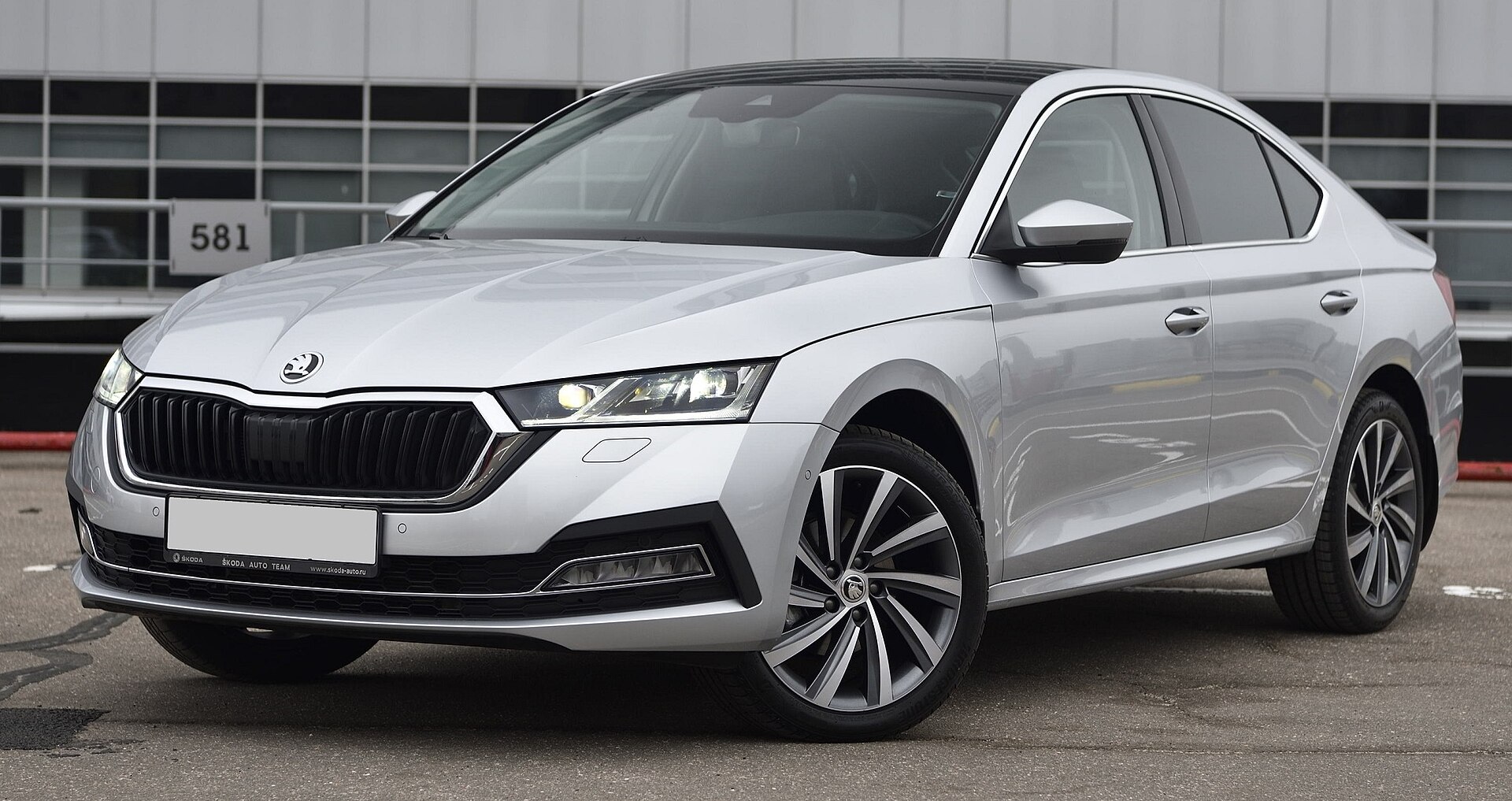
Choose liftback or Combi before opening quotations
Octavia liftback and Combi estate bodies have different cargo profiles. The cited figures are 600 to 1,555 litres for the liftback and 640 to 1,700 litres for the Combi, while both share a 2,686 mm wheelbase in the referenced table. State body code, rear-seat configuration, cargo-floor option and intended load in the request. Fleet boxes, mobility equipment and long tools need dimensions, not just litres. A supplier must not use Combi capacity to sell a liftback or treat both body styles as interchangeable for roof and rear-overhang planning.
Create separate powertrain ledgers
The cited European range includes 1.5 TSI outputs, mild-hybrid versions, a 2.0 TSI 4x4 and market-dependent diesel or RS choices. Manual, DSG, front-wheel drive and four-wheel drive create distinct service and parts requirements. Record engine code, gearbox code, emissions stage, body and production month. The current evidence should not be used to advertise an older plug-in hybrid as a listed 2025 configuration. Keep fuel, AdBlue where applicable, 48-volt components and driveline maintenance in separate cost ledgers.
Match fleet duty to axle and towing data
An Octavia selected for sales travel is not configured the same way as one carrying tools, towing or running fully loaded on motorways. Obtain the variant-specific weights, axle limits, tyre load indices and permitted trailer data. Add occupants, luggage, roof load, tow-ball download and accessories to one calculation. Verify the installed hitch and wiring approval. Body-style cargo volume does not establish payload, and a powerful engine does not establish towing permission. The commercial file should preserve the exact technical table used for the offered variant.
Use the 2025 safety assessment with scope
The latest listed Euro NCAP assessment must be read with its tested powertrain, equipment and rescue information. Match airbags, centre protection, autonomous braking, lane support and driver monitoring to the VIN-linked option list. Check sensor calibration and warning history, then search official recall records by VIN. Destination approval may require compliant headlamps, rear fog arrangement, glass, emissions evidence, security and local-language documents. A current test is strong supporting evidence, but it does not eliminate variant or registration checks.
Plan workshop access for a complex fleet car
Before purchase, identify local competence for the chosen TSI, TDI, mild-hybrid, DSG or 4x4 system. Request service history, digital-record access, diagnostic scan and proof of completed campaigns. Price common filters and brakes separately from less frequent gearbox, 48-volt or all-wheel-drive work. Wheel and tyre size can materially change recurring cost. For fleet procurement, estimate downtime and substitute transport. A slightly simpler Octavia may deliver better availability than a high specification whose electronics or driveline parts require cross-border ordering.
Construct body-specific landed cost
Compare suppliers only after they quote the same body, engine, gearbox, drive, trim and equipment under one Incoterm. Separate vehicle price, export documents, inland transport, freight, insurance, port fees, tax, compliance conversion and final delivery. Add reserves for keys, maps, language coding, tyres and warranty exclusions. Calculate cargo value and operating cost against the actual fleet task. The Combi's extra space has value only when the buyer uses it; the liftback may be preferable where parking, aerodynamics or acquisition cost dominates.
Sign off an Octavia configuration sheet
Final acceptance should reconcile VIN, build plate, body code, engine, gearbox, driveline, wheel specification, option list, type-approval evidence and service record. Measure the cargo area in the selected floor position and test folding mechanisms. Scan all modules, inspect driver-assistance sensors and confirm recall status. The signed decision should name the selected configuration and rejected alternatives. This stops later documents from drifting between liftback, Combi, petrol, diesel, mild-hybrid and 4x4 evidence under one broad model name.
Frequently asked questions
Is this definitely one global 2026 Skoda Octavia specification?
A 2026 search label does not identify one Octavia. Confirm whether the offered VIN is the liftback or Combi and match its production month to the cited engine table, because cargo figures and available petrol, diesel, mild-hybrid or 4x4 configurations differ.
Which identifiers should be checked before payment?
Before payment, reconcile the Octavia's full VIN, body code, engine and gearbox codes, front-wheel drive or 4x4 system, wheel and tyre specification, emissions record, option list and type-approval data with the invoice.
How should fuel or charging compatibility be verified?
Use the exact Octavia engine and emissions labels to confirm destination fuel, diesel and AdBlue requirements where applicable, plus 48-volt and DSG service capability for mild-hybrid variants; do not import charging assumptions from an older plug-in-hybrid Octavia.
Does the cited safety result apply to every imported vehicle?
The latest cited Euro NCAP assessment applies only to its documented Octavia variant, safety equipment and test scope. Match airbags, braking and lane-support hardware, production period and destination approval to the offered VIN.
What belongs in the landed-cost and support check?
An Octavia fleet calculation should separate freight, tax and registration work and account for liftback or Combi cargo needs, tyres, DSG or 4x4 maintenance, diesel or 48-volt support, recall completion, diagnostic access and warranty territory.
Sources
- Skoda Octavia model updateSkoda Auto · 2026-08-22
- Octavia 2025 technical specificationsSkoda Auto · 2026-08-22
- Skoda Octavia safety assessmentEuro NCAP · 2026-08-22
- UN Vehicle RegulationsUNECE · 2026-08-22
- Vehicle type approval guidanceUnited Kingdom Vehicle Certification Agency · 2026-08-22
- Australian vehicle recall searchAustralian Department of Infrastructure, Transport, Regional Development, Communications, Sport and the Arts · 2026-08-22