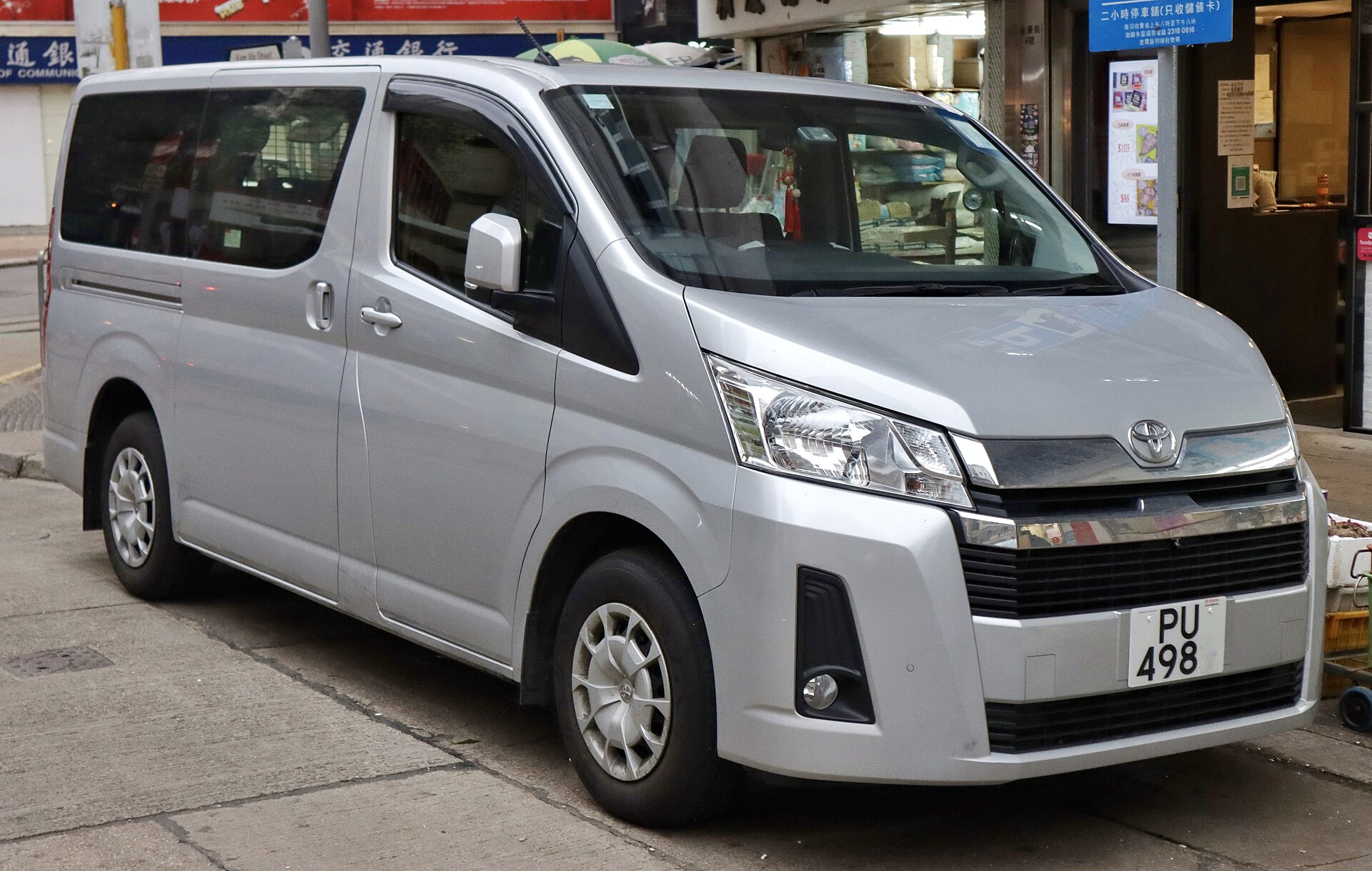
HiAce is a vehicle family, not one capacity number
Toyota Australia currently offers LWB Van, LWB Crew Van, SLWB Van and passenger-oriented Commuter variants. The same HiAce name therefore covers different wheelbases, seats, cargo volumes, kerb masses and safety scopes.
Start with VIN, model code, production date, LWB/SLWB, Van/Crew Van/Commuter, door arrangement and any refrigeration, wheelchair or passenger conversion.
The current Australian van reference has clear working limits
Toyota’s August 2025 specification sheet lists a 2. 8-litre 1GD-FTV turbo-diesel engine at 130 kW. Manual LWB Van torque is 420 Nm, while automatic variants are listed at 450 Nm.
The same reference lists GVM of 3,300 kg for LWB Van/Crew Van and 3,500 kg for SLWB Van, with braked towing of 1,900 kg for the LWB manual and 1,500 kg for the cited automatic van/crew variants. These are configuration-specific figures.
Payload must be recalculated after every conversion
Toyota Australia’s current range page publishes reference payloads such as 1,115 kg for a cited LWB automatic van, 950 kg for a cited LWB Crew Van and 1,135 kg for a cited SLWB van. A conversion, refrigeration unit, shelving, wheelchair equipment or extra seats changes the remaining payload.
Use the actual certification plate and measured/verified tare after conversion. Never promise a factory payload number after adding a body or interior without recalculation.
Safety scope separates vans from passenger buses
ANCAP’s current 2025 HiAce safety rating applies to updated van and crew-van variants built from June 2025 and on sale from August 2025. ANCAP states the HiAce Commuter bus and Minibus variants are unrated under that star-rating record.
ANCAP also publishes a separate 2025 commercial-van safety grading focused on active collision avoidance. Do not mix a commercial-van grade, a star rating and an unrated Commuter into one “HiAce safety score. ”
Commercial use adds destination and body-builder checks
For refrigerated, ambulance, wheelchair, shuttle or other conversions, verify who changed the vehicle, the added mass, seat/anchor certification, emergency exits, electrical loads, roof/door dimensions and whether the destination recognises the conversion.
Fuel quality, emissions after-treatment, diagnostic support, commercial tyres, brakes and collision parts also affect fleet uptime.
Buyer decision
A HiAce export can be a strong commercial purchase when the exact body and working limits are documented. The contract should identify VIN, production date, LWB/SLWB, seat count, transmission, GVM, actual payload, towing, conversion status, ANCAP scope, destination approval and service responsibility.
What the HiAce contract should identify
A HiAce quotation should begin with body identity because the model name covers vehicles that do different jobs. Record the VIN or model code, production date, LWB or SLWB, Van/Crew Van/Commuter, seat count, door arrangement, engine and transmission. Then record the certified GVM and axle limits and the verified tare/kerb mass of the actual vehicle. Factory payload references are useful only before the buyer changes the vehicle. Refrigeration units, shelves, wheelchair lifts, extra seating, camper interiors, roof equipment and auxiliary batteries all consume payload and can move axle loads. After a conversion, weigh or otherwise obtain reliable post-conversion mass evidence and recalculate the remaining payload instead of continuing to advertise the factory number.
Towing and safety need the same configuration discipline. Toyota Australia’s August 2025 specification sheet separates manual and automatic towing values and different body GVMs; those figures should remain attached to the cited configuration. ANCAP’s current 2025 star-rating record covers updated Van and Crew Van variants within its build/on-sale scope and explicitly does not give the Commuter bus/Minibus the same star-rating status. ANCAP also publishes a separate commercial-van safety grading focused on active collision-avoidance performance. A buyer should name which record is being used instead of blending them into one “HiAce safety score. ” For a commercial conversion, additionally confirm destination engineering acceptance, seat/anchor certification, emergency access, tyre/brake capacity and the local ability to service diesel emissions, ADAS and conversion hardware.
When the HiAce evidence is not sufficient
Stop if the seller quotes a payload number without identifying the body and transmission or if accessories/conversion mass has not been subtracted. Pause when a manual-van towing figure is reused for an automatic or another wheelbase without an official source. A HiAce converted after manufacture should not be sold on the assumption that the factory gross mass, axle balance and passenger approval are unchanged.
Also stop when the safety description mixes Van, Crew Van and Commuter evidence, or when the destination approval of a refrigerated, ambulance, wheelchair, shuttle or camper conversion is unresolved. Commercial buyers need a support plan for tyres, brakes, glass, collision parts, diesel after-treatment, diagnostics and specialist conversion components. The purchase becomes defensible only when body, mass, towing, conversion, safety scope and destination registration all describe the same finished vehicle.
Match the HiAce to the real commercial duty cycle
After body and payload are established, compare the vehicle with the route it will actually work. A courier van, refrigerated vehicle, hotel shuttle and wheelchair conversion place very different loads on brakes, tyres, cooling, doors, electrical systems and interior hardware. Estimate daily distance, stop frequency, passenger or cargo mass, idle time, road condition and service intervals. For remote or high-utilisation fleets, identify the parts that can immobilise the vehicle and decide whether they should be stocked locally. If a buyer is choosing between LWB and SLWB or Van and Crew Van, the decision should be based on usable payload and access after the intended body equipment is fitted, not simply on advertised cargo volume. A well-matched HiAce is a completed commercial system, not an empty factory van plus assumptions.
Frequently asked questions
Is the quoted Toyota HiAce definitely a 2026 vehicle?
Not from the sales title alone. Match the VIN, production label, factory model code and build sheet to the cited market documentation, then record any difference between build year, model year and registration year in the contract.
Which identity documents should arrive before payment?
Require clear VIN and certification-plate images, the unedited build sheet, ownership and export documents, service history, recall search, inspection report and a signed equipment schedule. Names and numbers should agree across every document.
Does the cited safety result cover every Toyota HiAce?
No. The relevant reference is ANCAP 2025 / 06-2025+ / Van / Crew Van / Commuter: n/a, and its date, tested body, powertrain and variant table control applicability. A different generation, cab, battery, seating layout or regional derivative needs separate evidence.
What must be checked for fuel or charging compatibility?
Confirm the exact fuel grade, sulphur tolerance, emissions after-treatment and tank/range assumptions; a familiar engine family can still have market-specific calibration. Confirm the exact fuel specification or inlet, voltage and phase support, onboard charging limits, public protocol, cold- or hot-weather behavior and the destination workshop’s ability to diagnose the quoted configuration.
How should total landed cost be compared?
Compare one written total that includes purchase, inland transport, inspection, freight, insurance, port costs, duty, tax, brokerage, storage, compliance work, registration and initial maintenance. Keep a contingency for configuration-specific parts.
Sources
- HiAce Spec Table August 2025Toyota Australia · 2026-08-22
- HiAce range and specificationsToyota Australia · 2026-08-22
- Toyota Hiace safety ratingANCAP Safety · 2026-08-22
- Toyota HiAce recall recordAustralian Vehicle Recalls · 2026-08-22
- Vehicle RegulationsUNECE · 2026-08-22
- Register of Approved Vehicles public searchAustralian Department of Infrastructure · 2026-08-22