Africa market sourcing
EV charging connectors for Africa: choose the country and duty cycle first
There is no single connector answer for every African country or vehicle. A dependable purchase starts with the destination and operating route, then procures the vehicle and charging equipment as a maintainable system.
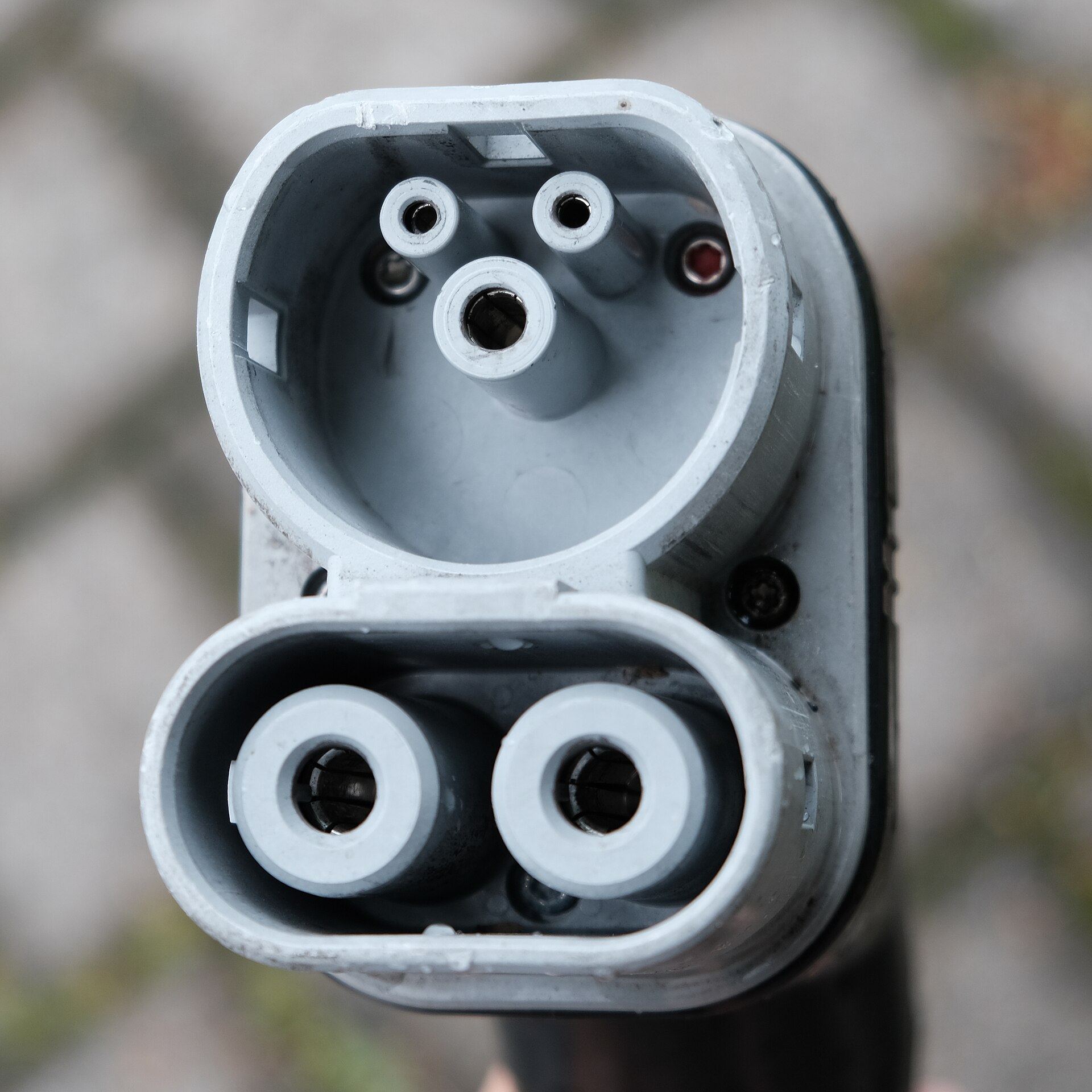
Do not treat Africa as one charging market
Vehicle origins, adopted standards, public charging deployment and electricity regulation differ from country to country. New and used vehicles arriving from Europe, China, Japan or North America can bring Type 1, Type 2, CCS1, CCS2, CHAdeMO or GB/T systems. The label “Africa version,” or a familiar model name, is not evidence. The conclusion must identify the destination country, model year, market variant and photographed inlet.
Build a country file before asking for quotations. Identify the energy and transport authorities, product approval path, common public connectors, distribution utility and party that certifies a private installation. Kenya's EPRA has issued official charging and battery-swapping infrastructure guidance, but Kenya's framework cannot be assumed to govern South Africa, Morocco, Rwanda or another destination. Obtain a current answer from each relevant authority.
Begin with the vehicle duty, not the highest charger rating
Urban delivery vans, ride-hailing cars, buses, motorcycles and private cars do not need the same charging design. A fleet on fixed routes may return to a depot for a long overnight dwell and avoid dependence on a dense public network. A private car making intercity journeys needs reliable connectors along its route. UNEP's African programmes span two- and three-wheelers, light vehicles and buses, reflecting that the continent has several distinct operating problems.
Record daily distance, arrival and departure windows, the proportion of vehicles returning to base, reserve vehicles and the worst operating day. Convert those observations into energy that must be restored and the number of simultaneous sessions. Only then choose the mix of AC charging, DC charging or swapping. Buying the largest headline power without this calculation can add transformer, demand and maintenance costs without improving availability.
The electricity connection decides whether charger power is real
Distribution capacity, reliability and voltage quality remain binding constraints in some locations. A vehicle's ability to accept high-power DC does not mean a depot can obtain that connection. A destination engineer should measure existing load, phases, voltage, fault level, earthing and outage history, then ask the utility for the cost and lead time of any reinforcement. The African Development Bank's emphasis on access and stronger interconnected systems is a reminder that site conditions cannot be inferred from a charger brochure.
Where capacity is constrained, the engineering options may include scheduled charging, dynamic load management, sharing a lower power budget across more dispensers, or properly designed storage. Backup generation and solar should not be counted as usable charger capacity without checking waveform, earthing, transfer, protection and fire controls. Model the energy through an entire night or shift change, including conversion losses and unavailable equipment, rather than comparing nameplate kilowatts.
Heat, dust, rain and daily handling change the equipment choice
IEC 62196 addresses thermal, mechanical and contamination stresses for connection accessories, but the purchaser still has to specify the actual environment. High ambient temperatures can derate the vehicle or charger. Dust can foul contacts, filters and cooling paths. Heavy rain, standing water and coastal salt can raise insulation and corrosion risks. An enclosure rating is meaningful only for the complete product installed in the stated orientation with suitable cable entries.
Physical operations matter too: vehicle impact, cables dragged on the ground, unauthorized use and long spare-parts lead times can dominate reliability. Plan shade, drainage, wheel stops, lighting, cleaning and inspection. Require a locally executable maintenance schedule, replaceable-part list, remote diagnostic method and technician training. A sealed imported cabinet without service access is not a resilient charging system.
Accept the connector, protocol and backend as separate layers
After confirming the plug, verify the vehicle voltage window, control signalling, locking, temperature supervision and software. DC charging depends on a successful negotiation between the vehicle and equipment; a mechanical adapter does not prove protocol conversion. Test every vehicle variant on the charger model being procured and record the session. A demonstration involving another model or another regional specification is not sufficient.
Public stations and larger fleets also need an operational backend. Test remote start and stop, offline transactions, load control, alarms, tariff handling and data export under imperfect connectivity. OCPP support is useful, but versions, optional features, vendor extensions and the ability to move away from a cloud provider still require acceptance. Agree who owns data and how the depot operates when mobile coverage or the platform is unavailable.
Write an operable system into the purchase contract
The evidence pack should contain inlet and data-plate photographs, manufacturer charging limits, destination regulatory confirmation, site electrical assessment, connector matrix, environmental declaration, witnessed charging records, spare-parts plan and training. Mark the model year, software version, date and responsible party on each item. This prevents a supplier from using evidence from a different market variant to support the shipment.
Acceptance should cover repeated operating cycles, not one successful plug-in. Record session-start success, sustained power, thermal derating, recovery from faults, offline backend behaviour and the proportion of vehicles ready by departure. Define repair, replacement or rejection when the agreed result is not achieved. Public-network coverage, utility reinforcement and permits that remain uncertain should be contractual conditions, never presented as guaranteed facts.
Count local service capability in the lifetime cost
The charger purchase price is only one cost. Filters, cables, connectors, contactors, power modules, communication units and cooling components all require maintenance or replacement. Ask which parts are stocked in the destination, how long customs and transport take, which work requires the factory, and how vehicles operate during an outage. Cheap equipment without local parts or authorized repair can create weeks of lost service from a minor failure.
Training should cover routine inspection, safe isolation, connector cleaning, error logs, remote support and response after flooding or impact, with usable local-language documents. Assign a site owner for the asset register, software versions and fault history. Compare alternatives through three-to-five-year availability, preventive maintenance, critical spares and service-level commitments, not the deposit alone. This also reveals whether the supplier's promised support can work beyond the capital city.
Frequently asked questions
What is the most universal EV connector in Africa?
There is no connector proven universal across all African countries. Verify the destination's public networks and rules, then inspect the exact vehicle inlet; evidence from one country cannot represent the continent.
Does a fleet always need high-power DC charging?
No. A fixed-route fleet with long depot dwell may meet its duty through managed AC or lower-power DC. The decision follows energy demand, parking time and redundancy, not marketing power.
Can a generator charge EVs during outages?
Only after engineering review. Capacity, waveform, earthing, transfer switching and protection must suit the charger, and fuel, maintenance and emissions costs belong in the operating model.
Will high temperatures reduce charging speed?
They can. The vehicle and charger may derate to protect batteries, connectors or power electronics, so request sustained-power evidence at relevant ambient temperatures.
What minimum test should be completed before purchase?
Test the exact vehicle and charger on a supply close to the destination conditions, covering AC, DC and backend offline behaviour, and retain power, temperature and error records.
Sources
- Electric Vehicle Charging and Battery Swapping Infrastructure GuidelinesEnergy and Petroleum Regulatory Authority of Kenya · 2026-07-13
- Electric mobility projects in AfricaUnited Nations Environment Programme · 2026-07-13
- Green growth, sustainable transportation and e-mobility in AfricaUnited Nations Environment Programme · 2026-07-13
- Light up and power Africa — energy and power systemsAfrican Development Bank Group · 2026-07-13
- IEC 62196-1:2022 — General requirements for EV conductive charging accessoriesInternational Electrotechnical Commission · 2026-07-13
- ISO 15118-1:2019 — Vehicle-to-grid communication interfaceInternational Organization for Standardization · 2026-07-13