Africa urban fleet procurement
Compact EV fleets in Africa: prove the depot, route and repair loop first
Compact EVs can reduce energy and maintenance exposure for an urban fleet, but only when each vehicle can return to dependable charging, complete its real duty and access local high-voltage support. Start with the country, route and power supply, then compare models.
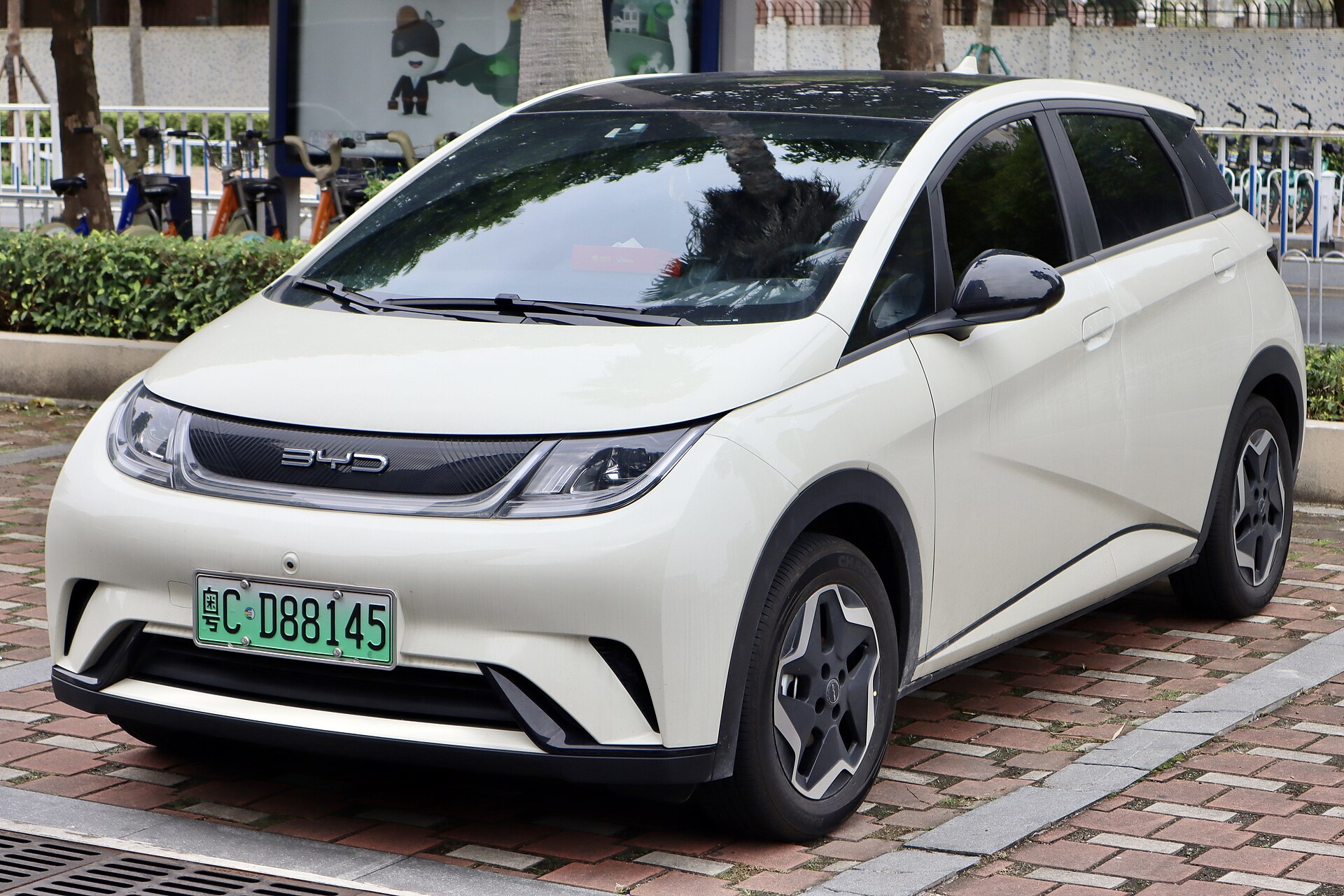
Name one country, one city and one duty
Africa now has a continental policy direction for electric mobility, but it is not a single vehicle-approval, tax or charging market. A procurement brief should name the destination country, registration city, importer of record, fleet purpose, shifts and return-to-base window. With those boundaries fixed, the responsible authorities can confirm import eligibility, type approval, steering side, inspection and registration requirements for the exact vehicle rather than for an EV category in general.
A compact car may improve urban manoeuvrability and energy use, yet that does not make it suitable for every assignment. Log passenger or cargo load, gradients, congestion, unpaved sections, flood points, air-conditioning demand and parking dimensions on each route. Set minimum requirements for clearance at working load, braking, tyres and a spare-wheel strategy. Let the duty eliminate unsuitable cars before asking a low quotation to define the operation backwards.
Treat the depot charger as operating equipment
Where public charging coverage and reliability vary sharply, a return-to-base fleet has a stronger starting position. An electrical engineer should survey connection capacity, transformer headroom, switchboards, earthing, protection, cable routes, drainage, lighting and fire access. Charger power should then follow each car's arrival state of charge, next departure and the number of overlapping vehicles. Buying a row of high-power chargers before this study can create cost without creating usable capacity.
Outages and voltage variation belong in the dispatch plan. Ask the utility about an upgrade process and realistic lead time, then compare managed overnight AC charging, limited DC recovery charging, staggered shifts and spare vehicles. Continuous charging from a diesel generator can alter both the cost and emissions case. If emergency generation is necessary, include fuel, maintenance, conversion losses, safe connection and the number of shifts it can actually sustain.
Test range on the hottest, heaviest route
Catalogue range is not dispatch range. Heat, continuous cabin cooling, full payload, gradients, stop-start traffic, rough surfaces and battery ageing all affect usable energy. A pilot should use normal drivers on the hardest routine and record departure and return charge, metered energy, temperature, downtime and warnings for every shift. Preserve a defined operational reserve; running the battery close to empty is not a credible way to prove the schedule.
Thermal management must cover the battery, cabin and charging event. Require the supplier to identify cooling hardware on the quoted variant, power limits at high temperature, refrigerant and air-conditioning part numbers, and charging behaviour after sun exposure. Inspect underbody battery protection, stated water limits, dust-protection evidence, loaded clearance and recovery points. Every answer must match the delivery configuration, not a better-equipped version sharing its name.
Put battery safety and incident response in the gate review
UN vehicle regulations provide technical frameworks for electric-powertrain safety, post-crash shock and battery hazards, but a regulation number is not automatic admission in the destination. Obtain the vehicle type and variant, approval number, issuing authority, conformity-of-production evidence and applicable VIN range. A locally recognised specialist should authenticate the documents and confirm that airbags, stability control and driver-assistance equipment match both the certificate and the purchase order.
The depot needs high-voltage isolation procedures, a quarantine area, towing arrangements and fire-service contacts. Drivers and dispatchers should know how to disconnect, evacuate and report after a collision, water exposure, smoke or a charging fault; technicians need suitable training and insulated tools. Damaged vehicles and batteries can face special road, port or sea-transport conditions, so the contract must allocate diagnosis, packaging, transport, storage and final treatment costs.
Test aftersales promises with downtime cases
A sales outlet is not evidence of high-voltage repair capability. Bidders should name the destination-country legal entity, authorised workshops, trained technicians, diagnostic accounts, software permissions and insulated equipment. Use a windscreen, charge inlet, onboard charger, air-conditioning compressor, damper and battery-cooling component as sample cases. Request local stock, part numbers, replenishment routes and labour estimates instead of accepting a general statement that parts are available.
Compact fleets often depend on high utilisation for their economics, so one car waiting for a component can erase energy savings. The service agreement should define fault severity, response channels, substitute capacity, remote-diagnostic data rights and escalation for repeated defects. Test the infotainment, app and updates in the destination before shipment. Dependence on a Chinese phone number, inaccessible cloud service or Chinese-only interface is an operational defect, not a cosmetic inconvenience.
Turn landed price into auditable lifecycle cost
Separate vehicle price, China inland transport, export records, freight, insurance, port charges, inspection, taxes, clearance, inland delivery, registration, charger construction, grid upgrades, initial parts, training and finance. On the operating side, use the actual tariff and charging losses, then add tyres, cooling-system work, insurance, depot rent, scheduled service and an hourly downtime value. Do not import a generic percentage saving from another country or another fleet duty.
Exchange rates, taxes, incentives, public charging prices and resale values can move, so calculate base, stress and delayed-connection cases. Read the battery warranty for the responsible entity, time and distance conditions, capacity threshold and measurement method, commercial-use eligibility and cross-border claims. If there is no enforceable local obligor, discount the warranty's financial value heavily instead of treating promotional coverage as a recoverable asset.
Let a controlled pilot authorise expansion
The first batch should cover representative drivers, shifts and routes, while remaining small enough to stop if charging or support fails. Define on-time dispatch, energy per kilometre, charging success, cabin comfort, tyre wear, fault downtime and manual interventions. Compare the pilot with existing vehicles doing the same work and review all shifts, not a selected best day. This turns operational evidence into a procurement decision rather than a demonstration event.
Set non-negotiable expansion gates: admission documents authenticated, depot energised, safe reserve retained on the hardest route, critical parts connected to a supply path, high-voltage response rehearsed and battery responsibility written into the contract. If one gate remains open, alter the route, model or order size. The result should be a repeatable fleet system that survives ordinary failures, not a purchase that works only while every optimistic assumption holds.
Frequently asked questions
Should an African urban fleet rely entirely on public charging?
Usually not without route-level testing. Establish dependable depot charging first, then treat public sites as support and verify each connector, payment method, access window, uptime and fault response.
Is catalogue range enough if it exceeds daily mileage?
No. Test full load, heat, air conditioning, gradients and congestion, and retain reserve for ageing, diversions and a failed charging event.
Does a UN R100 approval guarantee local registration?
No. It must cover the exact type, variant and VIN range, while the destination may also require whole-vehicle approval, inspection, tax and registration evidence.
How can a buyer verify local EV service?
Check the authorised legal entity, trained high-voltage staff, diagnostic rights, insulated tools and critical stock, then request written lead times and procedures for sample failures.
How many vehicles should be in the first batch?
There is no universal number. It should cover representative routes and shifts without creating unmanageable inventory or downtime exposure if charging, approval or parts support fails.
Sources
- African Transport and Energy Ministers endorse two continental policy frameworks to transform mobility across AfricaUnited Nations Environment Programme · 2026-07-14
- Electric mobility projects in AfricaUnited Nations Environment Programme · 2026-07-14
- Building the Energy Foundations for Rwanda's Electric Mobility TransitionWorld Bank · 2026-07-14
- EV, HEV and FCUnited Nations Economic Commission for Europe · 2026-07-14
- Global EV Outlook 2026International Energy Agency · 2026-07-14
- Electric Mobility in Developing Countries: Cost Benefit Analysis and Policy GuidanceWorld Bank · 2026-08-12