Cross-border EV sourcing
Does an EV Battery Warranty Still Apply After Export?
An eight-year battery warranty can make an electric vehicle look safer to buy. For an overseas importer, however, the number printed in a brochure is only the beginning of the warranty question. The real issue is whether the warranty can still be used after the vehicle leaves the market where it was originally sold. Before paying for an EV from China, a buyer needs to know who is responsible for the warranty, whether the exact vehicle remains eligible in the destination country, what conditions apply to a battery claim and where the vehicle can actually be diagnosed and repaired. If those points cannot be established, the commercial value of the warranty has not yet been established either.
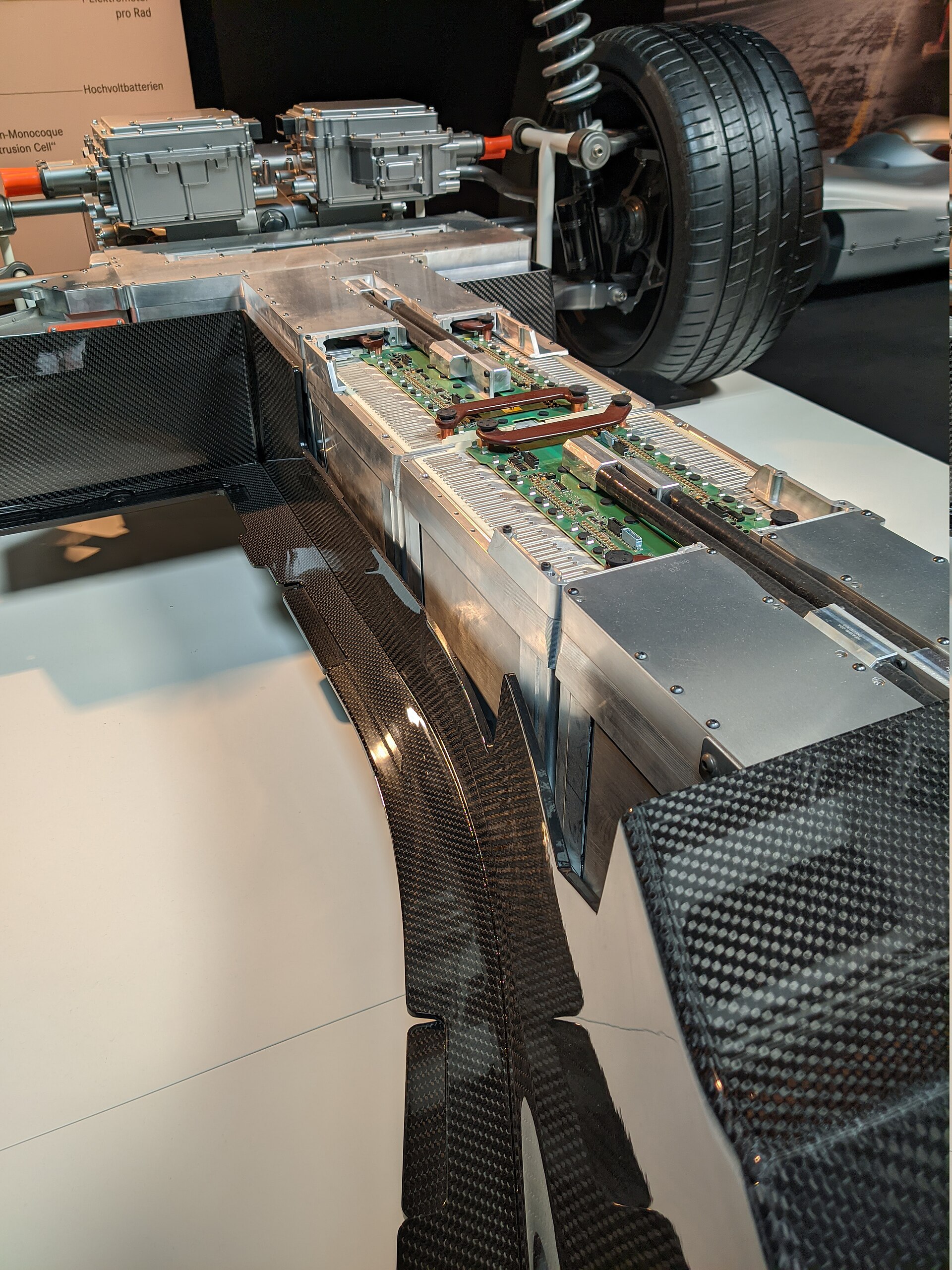
Battery warranty is not a universal vehicle specification
A battery warranty should not be treated like wheelbase, battery capacity or motor output. The same manufacturer can publish different warranty conditions in different markets.
BYD provides a useful example. Its current UK warranty information lists battery coverage of eight years or 200,000 km, subject to the applicable terms and model conditions. BYD's official Middle East and Africa service information also states eight years or 200,000 km for the power battery. BYD Bolivia, however, publishes eight years or 150,000 km for the power battery and states an SOH requirement of at least 60%.
These figures are not included to decide which market has the “better” warranty. They demonstrate why an importer cannot assume that a warranty headline is globally identical. Market, mileage limit, battery-health conditions and service arrangements can differ. If a supplier says, “This vehicle has an eight-year battery warranty,” the buyer still needs to ask which market the vehicle was originally sold for and which warranty document actually applies to the VIN being purchased.
Export can change the practical value of warranty coverage
Territory is especially important when a vehicle moves through a parallel-import channel. BYD's limited warranty documentation for Europe and Israel states that the rights and obligations under its new-vehicle limited warranty apply within the Warranty Region where the vehicle was purchased new.
The same documentation recommends returning the vehicle to the corresponding warranty region in which it was originally purchased. It explains that another region may not have the relevant spare parts or maintenance capability and may not be able to guarantee timely after-sales service.
For an overseas buyer, that detail can matter more than the headline warranty period. A vehicle may still show several years of warranty remaining on paper. But if the destination country cannot perform the required diagnosis, obtain the necessary parts or open the applicable claim, the importer may still face expensive downtime and logistics. The correct question is therefore not simply “Is there a battery warranty?” but “Can this specific vehicle use that warranty where I intend to operate it?”
Do not confuse battery durability regulation with a consumer warranty
International technical rules also appear frequently in EV procurement documents. UN Global Technical Regulation No. 22 concerns in-vehicle battery durability for electrified light-duty vehicles. It provides an international technical framework related to battery durability and monitoring.
It does not create a worldwide manufacturer warranty for every vehicle. Technical compliance concerns whether a vehicle or battery satisfies the applicable technical requirements. Warranty verification concerns who will provide a remedy for an eligible failure, under what conditions and through which service network. An importer should not use evidence that answers one question as automatic proof of the other.
Move from the model name to the VIN
Warranty checking becomes much more useful when the investigation moves from a model to an individual vehicle. Before payment, obtain the VIN. Confirm the vehicle's original sales market, exact version and warranty starting point. For a used EV, also check the original delivery or registration date, current mileage and remaining coverage where applicable.
A screenshot from a manufacturer's general warranty webpage is not enough. That webpage may describe vehicles officially distributed in one country, while the vehicle being offered for export may have been produced, sold or registered through another market.
For higher-value purchases, dealer inventory or fleet orders, seek written confirmation from the manufacturer, authorised distributor or relevant destination-market service provider whenever practical. Instead of asking “Does this brand have an eight-year battery warranty?”, ask: “Will this VIN remain eligible for traction-battery warranty service in the destination country after export and resale?” A VIN-specific answer is much more useful in a procurement decision.
Warranty remaining and battery condition are different risks
A battery can still be within its warranty period without necessarily being in the condition an importer expects. Normal degradation also does not automatically mean that a manufacturer must replace the battery. Warranty policies can contain their own capacity or SOH thresholds, exclusions and diagnostic requirements.
For a used EV, buyers should therefore request battery-condition evidence in addition to warranty evidence. Useful documentation can include a diagnostic result connected to the VIN, the test date, odometer reading, relevant high-voltage fault information and the method used to generate the result.
Displayed driving range alone is weak evidence. Range estimates change with recent consumption, driving style, temperature, climate-control use and vehicle software calculations. If adequate battery-condition evidence is unavailable, record the condition as unverified. Do not convert missing evidence into an assumption that the battery is healthy.
Frequently asked questions
Find out what actually happens when a battery fault occurs
The most useful warranty question is often a failure scenario. Assume the vehicle has already arrived in the destination country and develops a battery fault. Who performs the first diagnosis? Is an appropriate authorised workshop available? Can the workshop access the diagnostic tools required for that vehicle? Who decides whether the failure qualifies for warranty treatment? Where will replacement parts come from? If the vehicle or battery must be moved to another country or warranty region, who carries the transport cost? For dealers and fleet operators, vehicle downtime can become as significant as the repair bill itself. That means after-sales capability belongs in the procurement decision together with purchase price, freight, customs costs and other landed-cost items.
Separate manufacturer warranty from seller warranty
Automotive export transactions can involve several parties: manufacturer, domestic dealer, exporter, trading company, overseas importer and local repair provider. Their responsibilities are not interchangeable. A manufacturer warranty is governed by the manufacturer's applicable terms. A seller warranty is an additional commercial promise made by the exporter or dealer. A local service commitment may be offered by a workshop, distributor or third party in the destination country. If an exporter says that it will cover a battery problem even when the manufacturer does not, the commitment should be written into the sales contract. The contract should identify the responsible company, duration, major exclusions, available remedy and responsibility for diagnosis, parts and transport costs. A verbal statement that “the car includes warranty” is not enough evidence for a high-value international transaction.
What should be verified before payment?
Before approving a new or used EV purchase, verify the items that are relevant to the transaction. If an important point cannot be verified, keep it unresolved. The purpose of pre-purchase verification is not to make every uncertainty disappear; it is to prevent an uncertainty from being presented as a confirmed fact. Exact VIN; Model year and vehicle version; Original sales or registration market; Warranty starting date; Remaining time and mileage; Applicable traction-battery warranty conditions; Any relevant SOH or capacity condition; Whether a change of ownership affects coverage; Whether export or parallel import affects coverage; Where a claim can actually be opened; Which diagnostic process is required; Whether suitable workshop and parts support exists locally; Who carries diagnosis, repair and transport costs; Written conditions of any additional seller warranty.
Does an EV Battery Warranty Still Apply After Export?
No. Some exported EVs may retain warranty coverage that can genuinely be used in the destination country. Others may face limitations connected to the original sales market, warranty region, service network, documentation or route through which the vehicle was supplied. There is no reliable universal answer based only on a brand name, model or advertised warranty period. For an overseas buyer, the safer method is to verify the exact VIN, original market, destination country and real claim pathway before shipment. An eight-year warranty becomes commercially valuable only when the buyer also knows who stands behind it, where it can be used and what will happen when a battery problem actually occurs.
Sources
- UN GTR No. 22: In-vehicle Battery Durability for Electrified Light Duty VehiclesUnited Nations Economic Commission for Europe · 2026-08-22
- Regulation No. 100 Rev.3United Nations Economic Commission for Europe · 2026-08-22
- Electric vehicle batteries – Global EV Outlook 2025International Energy Agency · 2026-08-22
- Battery LifespanNational Renewable Energy Laboratory · 2026-08-22
- Maintenance and Safety of Electric VehiclesU.S. Department of Energy Alternative Fuels Data Center · 2026-08-22
- UN Model Regulations Rev. 22United Nations Economic Commission for Europe · 2026-08-22