Latin America sourcing
EV charging connectors in Latin America: build a country-and-route matrix
Electrical rules, public networks and vehicle origins vary across Latin America. Buyers need a matrix for each destination and cross-border route, not a single assumed regional standard.
Map the countries before selecting an adapter
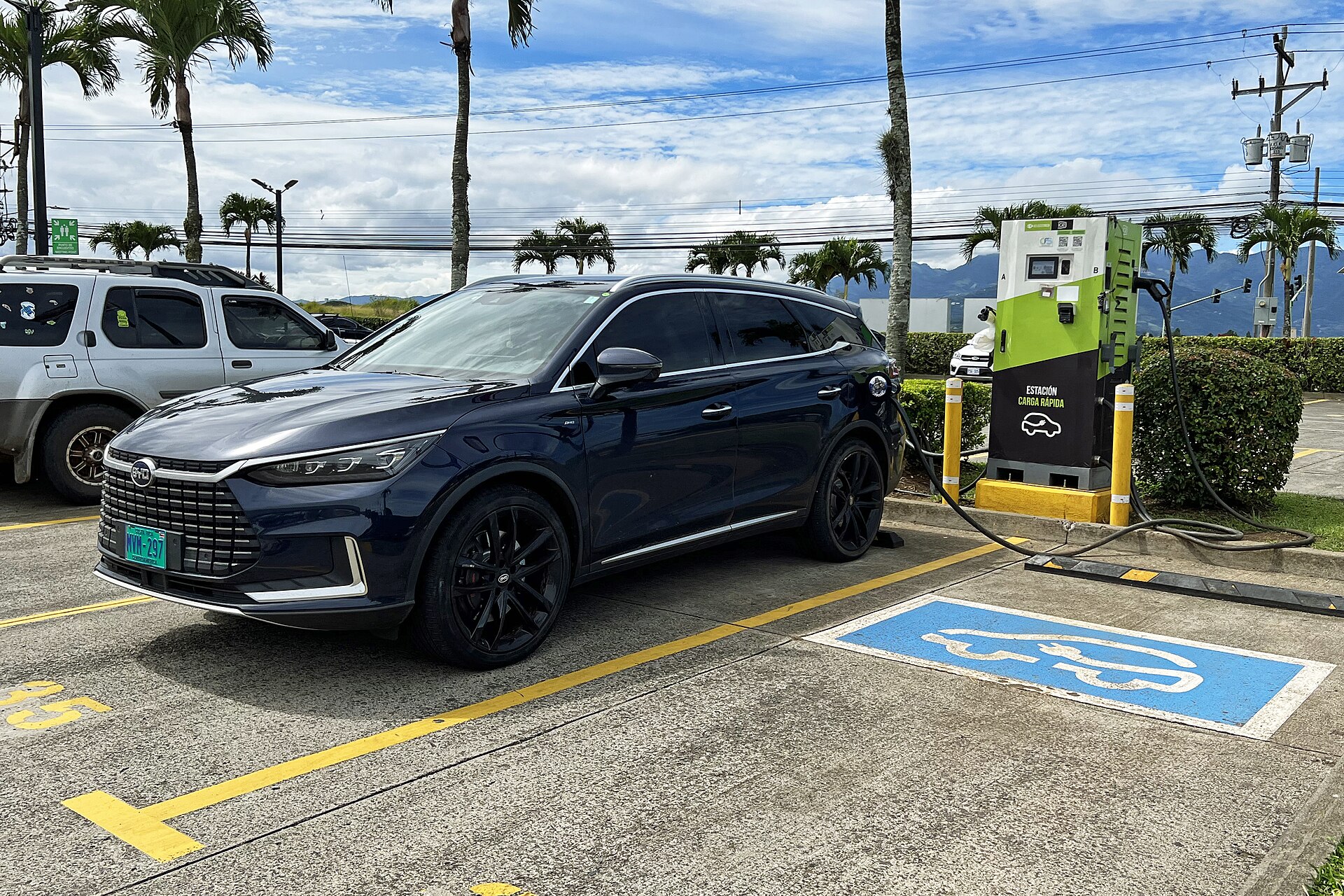
Latin American vehicle fleets reflect European, North American, Japanese, Chinese and domestic supply chains. Depending on age and origin, vehicles may carry Type 1, Type 2, CCS1, CCS2, CHAdeMO or GB/T. Similar household electricity practices in two countries do not establish the same public fast-charging connector, product approval or operating rules. A regional label is therefore too broad for a purchase decision.
Chile's SEC publishes RIC No. 15 requirements, commissioning procedures and authorized-product resources. Brazil's ANEEL explains charging activity under its electricity-distribution framework. Colombia continues developing public-station interoperability rules. Read the current destination document separately, recording the responsible authority, document version and effective status. A regional trend should never be presented as a legal requirement in every country.
Vehicle origin is stronger evidence than the model badge
A manufacturer can fit different inlets and onboard chargers to one model name for separate sales markets. North American-origin vehicles may differ from European- or Chinese-origin versions. A used import may also have received software updates, accident repair or non-original modification. Request inlet and data-plate photographs, VIN-range evidence, original sales market, model year and manufacturer charging documentation.
Separate AC from DC in the matrix. AC verification covers the inlet, phases, onboard charger and local supply. DC verification covers the connector, battery voltage window, communication, thermal limits and charging curve. A mechanical adapter does not automatically convert those layers. A supplier claiming compatibility should provide a recorded test for the exact vehicle software and charger model, with faults and sustained power shown.
Sample public networks by city and travel corridor
National charger totals do not answer whether a buyer can complete a real journey. Residential districts, shopping centres, depots, intercity roads and border areas can have different operators, connectors, power, payment and reliability. Sample the planned operating points and record connector, number of working dispensers, opening hours, payment method, fault reports and date of verification.
Cross-border operation needs tests on both sides. If neighbouring markets favour different interfaces or user accounts, the vehicle needs dependable base charging and a fallback route. Roaming platforms and map applications are useful discovery tools, but they do not guarantee an available or functioning session. Confirm critical stations with their operator or current site evidence and maintain a second option.
Electrical installation and local climate can overturn the selection
Supply voltage, phase arrangements, earthing, protective devices, metering and connection procedures vary among countries and distribution territories. A licensed local professional should measure site capacity and fault conditions before equipment is imported. Apartment buildings, commercial car parks and public charging businesses may each trigger different building, fire and electrical approvals even within one city.
Sites across the region can face tropical humidity, intense rain, coastal salt, altitude derating or wide temperature swings, but there is no single “Latin American climate.” State the actual location, altitude, temperature, humidity, sun, drainage and corrosion exposure in the specification. Require the supplier to declare sustained output, enclosure protection, cooling limits and maintenance intervals under those conditions.
Public operation adds payment, data and backend requirements
Physical compatibility solves only part of the vehicle-to-charger problem. A public service also needs users to discover the site, understand the price, start without unreasonable barriers and receive a transaction record. Official work in Chile and Colombia highlights interoperability and information availability. Acceptance should cover guest payment, price display, location and status data, support and receipts.
Test OCPP version, optional functions, vendor extensions and certificate renewal between the charger and platform. Verify what happens during connectivity loss, how transactions are recovered, whether tariffs remain correct and whether equipment can migrate to another backend. Without those rights and tests, mechanically compatible hardware can still become unusable behind a closed cloud service.
Lock the order with traceable evidence
The final matrix can place each exact vehicle configuration in a row and destination, AC inlet, DC inlet, voltage, power, communication, public network and depot charger in columns. Link every conclusion to manufacturer evidence, an authority page, operator information or a witnessed session. Do not copy a search snippet as proof, and label every unresolved field openly.
The contract can require AC and DC sessions on representative destination equipment, recording start success, sustained power, temperature, errors and payment flow. Define replacement or refund if the inlet is wrong, approval fails or the backend cannot be moved as promised. Public-network changes, utility reinforcement and cross-border roaming are external dependencies and should be identified as such rather than guaranteed by a seller.
Recheck used vehicles and changing configurations
For used imports, an inlet photograph does not reveal the complete history. Accident repair, non-original parts, software versions, traction-battery replacement and an earlier owner's adapter can change the outcome. Inspection should read diagnostic and software information, examine inlet mounting, pins, locking and heat damage, and include real AC and DC sessions in the condition report. An auction listing or remote photograph alone leaves a compatibility dispute difficult to resolve.
Continue the check after arrival because public networks and rules change. Assign an owner to review critical corridors, operator accounts and tariffs regularly, retain failed-start and derating records, and share logs with vehicle and charger suppliers. Pilot new models, firmware and backends before updating the compatibility matrix. This turns one procurement study into an ongoing operational control and gives future buyers evidence based on the local fleet rather than assumptions.
For a used-vehicle batch, sample different production dates and software versions rather than testing only the cleanest unit. If inlet part numbers, charging modules or fault histories differ, divide the batch into acceptance groups and label them separately. Keep original photographs, diagnostic reports and charging timelines with the delivery record. Those materials help distinguish transport damage, a pre-existing defect and a destination-charger mismatch when a claim is raised.
Frequently asked questions
Does Latin America use one common EV connector?
No single connector covers every country and legacy fleet. Type 2 and CCS2 matter in several markets, but country rules, vehicle origin and installed networks still require direct verification.
Will the same model always have the same inlet?
No. Sales-market and model-year variants can change the inlet, onboard charger and software. Use photographs, the data plate and manufacturer evidence for the exact vehicle.
How should a cross-border buyer plan?
Sample stations along the actual corridor in every country, verify connectors, accounts and payment, and maintain dependable depot charging plus fallback sites.
Can altitude affect charging equipment?
It can affect cooling and equipment ratings, depending on design. Request the manufacturer's permitted altitude and any derating instructions for the installation.
Is OCPP the whole of public charging interoperability?
No. It mainly links charger and backend. Vehicle interfaces, payment, roaming, data publication and local regulation remain separate acceptance topics.
Sources
- Electromovilidad — normas y documentaciónSuperintendencia de Electricidad y Combustibles de Chile · 2026-07-13
- Veículos ElétricosAgência Nacional de Energia Elétrica do Brasil · 2026-07-13
- Estrategia Nacional para la Infraestructura de CargaMinisterio de Minas y Energía de Colombia · 2026-07-13
- Transport Electrification: Regulatory Guidelines for the Development of Charging InfrastructureInter-American Development Bank · 2026-07-13
- IEC 62196-1:2022 — General requirements for EV charging accessoriesInternational Electrotechnical Commission · 2026-07-13
- ISO 15118-1:2019 — Vehicle-to-grid communication interfaceInternational Organization for Standardization · 2026-07-13