Middle East sourcing
EV charging connectors in the Middle East: sustained heat performance beats peak power
A connector name and maximum kilowatt claim are not enough for the Middle East. Verify the country or emirate approval path and test the complete vehicle-charger-platform system near summer site conditions.
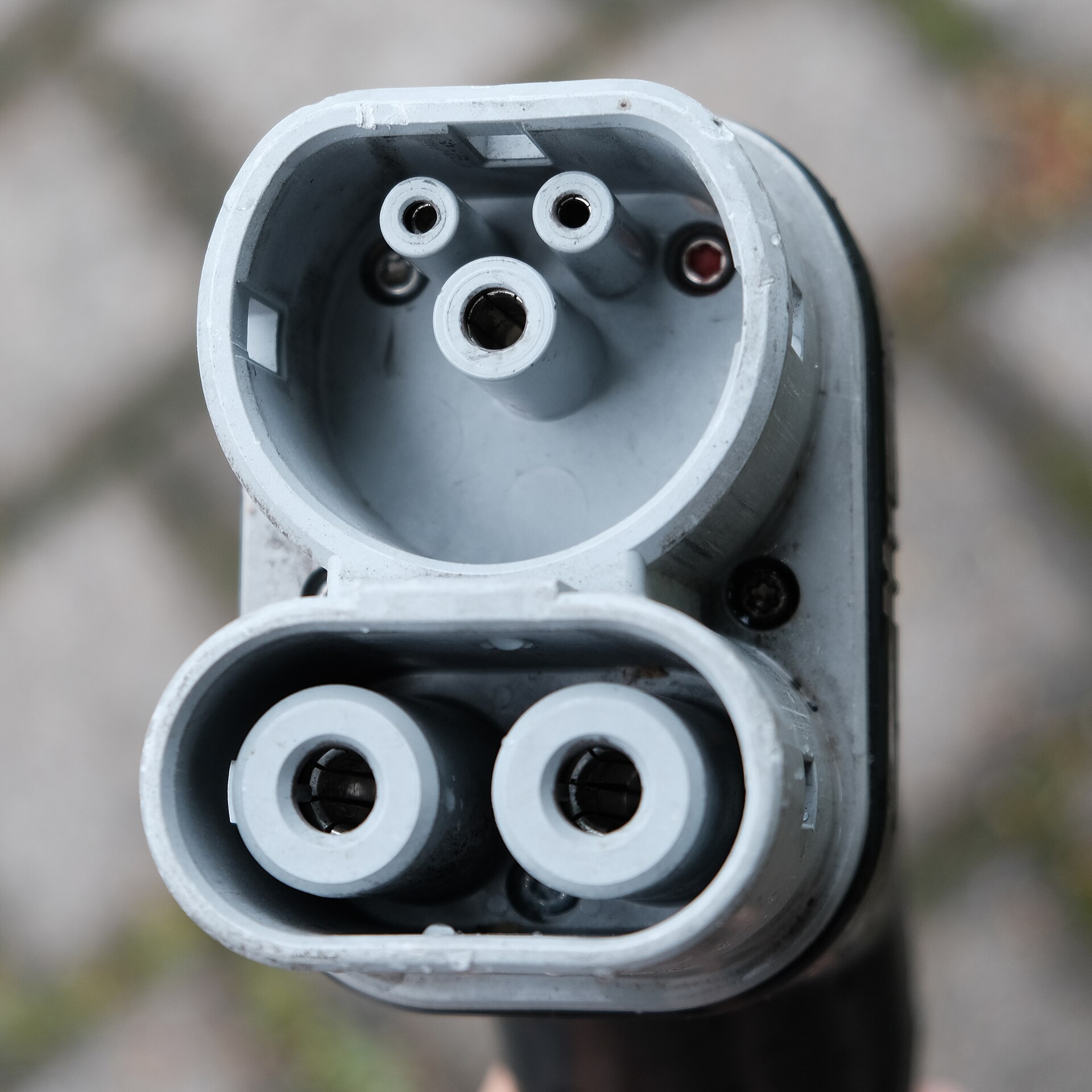
Name the jurisdiction before naming the connector
The Middle East does not have one charging regulation that automatically applies across every country. Dubai's DEWA publishes an infrastructure regulatory framework and technical requirements. Jordan's EMRC licenses activities at public and private charging stations. Saudi SASO has its own national standards adoption and consultation processes. The purchase file must state the country, city or emirate and cite the current effective document.
Finding Type 2, CCS or CHAdeMO on a public network does not prove that every imported vehicle will use it correctly. Vehicles can originate in Europe, China, North America or Japan, with different inlets, onboard chargers, DC voltage ranges and software. Demand inlet and data-plate photographs, original sales market, model year and manufacturer charging specifications; reject a vague “Gulf version” description.
Evaluate sustained output under heat, not one peak number
Connector and power-electronics temperatures directly affect safety and output. IEC 62196 includes temperature rise, wear and contamination considerations, but the purchaser must still establish the complete product's ratings and derating in the destination environment. A promotional peak obtained in mild test conditions does not show how long a vehicle can hold power after solar exposure and heat soak.
Record ambient and charger inlet-air temperature, vehicle battery temperature on arrival, starting state of charge, peak power, sustained power beyond a short burst, connector temperature and every derating warning. For outdoor sites, shade, airflow and cable cooling influence the result. Compare suppliers by energy delivered to the same vehicle under comparable conditions, not by nameplate kilowatts alone.
Dust, salt and cleaning intervals belong in the specification
Dust can load filters and cooling paths and contaminate connector surfaces, increasing temperature and service needs. Coastal locations may add salt corrosion. An enclosure rating cannot be read independently of mounting orientation, door seals, cable entries and maintenance condition. Require filter, cleaning and seal-inspection procedures, replaceable parts and high-temperature shutdown thresholds.
Site layout should reduce direct sun, vehicle impact and cables on the ground, while providing drainage, wheel stops and clear instructions. The maintenance offer should name local technicians, response targets, spare stock and remote diagnostic rights. A low-cost cabinet that depends on sending one critical module across borders can leave a station unavailable for weeks.
Put the building, utility and permit before the hardware order
Residential towers, hotels, malls, fuel stations and fleet depots face different distribution and approval questions. A licensed destination consultant should confirm capacity, transformer, fault level, earthing, residual-current protection, fire review, parking layout and cable routes, then verify connection and metering with the utility. Importing first and applying later risks wrong specifications and stranded equipment.
Higher-power stations also need demand and load-management analysis. Total allocation among dispensers, coincidence and vehicle dwell can matter more than one connector's peak. If solar or storage is proposed, controls, isolation, fire protection, losses and extreme-temperature capacity form one engineered system; battery nameplate energy is not automatically available charging energy.
Guest payment and the backend decide whether a public station works
DEWA's user material illustrates registered and guest journeys through applications, QR codes and payment channels. After connector acceptance, a public project should test discovery, price disclosure, authentication, payment, receipt and support. Overseas cards, visitor phone numbers and connectivity loss should be exercised in the intended operating model rather than assumed.
Separately accept OCPP version, certificates, remote updates, offline transactions, tariffs and data ownership between charger and backend. ISO 15118 addresses high-level vehicle-to-supply communication, but plug-and-charge or bidirectional operation cannot be promised by naming the standard. The vehicle, charger, certificate ecosystem and local electricity-market arrangements must all support the selected function.
Write summer acceptance conditions into the order
The evidence pack should include inlet and data-plate images, manufacturer limits, jurisdiction permit list, site electrical report, environmental schedule, thermal test, public-network sample, backend demonstration, spares and maintenance. Every record should identify the exact vehicle, charger and software version; a case study from another country is not proof for this installation.
Require repeated AC and DC sessions across agreed temperature and load conditions, recording start success, sustained power, derating, recovery and payment. Define repair and replacement when approval, connector or summer performance fails. Public-network coverage, construction permission and utility reinforcement that remain unconfirmed should be conditions precedent, not seller guarantees.
Compare cost by energy delivered to each vehicle
Equipment price and peak power are easy to compare, but the operation buys energy delivered before the vehicle's departure. The financial model should include summer derating, charging curves, simultaneous arrivals, demand charges, cooling energy, cleaning intervals, payment fees, cloud services and downtime. Chargers with the same nameplate can produce different real costs per delivered kilowatt-hour when sustained output and local service differ.
Run a full hot-weather week and record each vehicle's arrival charge, departure charge, occupancy, retries and incomplete duties. A public site should also measure availability, guest-transaction success and support response. Use those observations to set service levels, critical-spare holdings and remedies. This prevents acceptance during mild weather from concealing a system that cannot deliver energy when summer cooling demand and thermal stress are highest.
Separate fleet duties that must be ready the same day from charging that can be deferred. Scheduling low-state or early-departure vehicles first can improve completion without a larger connection, but dispatch rules must match backend capabilities. A design dependent on manual judgement, one cloud provider or data that cannot be exported carries a resilience cost that belongs beside electricity and maintenance in the comparison.
The comparison sheet should report on-time vehicle readiness, charging-bay availability and mean recovery time as well as price. Shared measures let procurement, operations and finance judge the same outcome. They also expose a lower-priced offer that depends on repeated manual intervention, slow overseas support or incomplete data. Review the figures separately for mild and hot periods so seasonal derating remains visible instead of being averaged away.
Frequently asked questions
Are Type 2 and CCS2 universal in the Middle East?
They are important in some markets and networks, but not a substitute for country-level verification. Check the vehicle origin, effective local standards, network and exact equipment.
Why does a hot-weather test matter more than peak power?
The vehicle, cable and charger may derate as temperature rises. Sustained power and delivered energy near summer conditions better predict operations.
Is a shade canopy only a comfort feature?
No. Good shade can reduce solar heat load on equipment and connectors, but it must be engineered with airflow, fire, clearance and structural requirements.
Can permits be obtained after the chargers arrive?
That creates substantial risk. Confirm product, installation, utility and operating requirements with destination authorities and licensed advisers before ordering.
Does ISO 15118 support guarantee plug-and-charge?
No. The vehicle, charger, certificates, contract backend and local operating ecosystem must support the function and pass an end-to-end test.
Sources
- Regulatory Framework for EV Charging InfrastructureDubai Electricity and Water Authority · 2026-07-13
- EV Chargers Types and InstructionsDubai Electricity and Water Authority · 2026-07-13
- Activities of electric vehicle charging stationsEnergy and Minerals Regulatory Commission of Jordan · 2026-07-13
- EV plugs and vehicle inlets — IEC 62196-3 public standards materialSaudi Standards, Metrology and Quality Organization · 2026-07-13
- IEC 62196-1:2022 — General requirementsInternational Electrotechnical Commission · 2026-07-13
- ISO 15118-1:2019 — Vehicle-to-grid communication interfaceInternational Organization for Standardization · 2026-07-13