Start with identity, not the badge
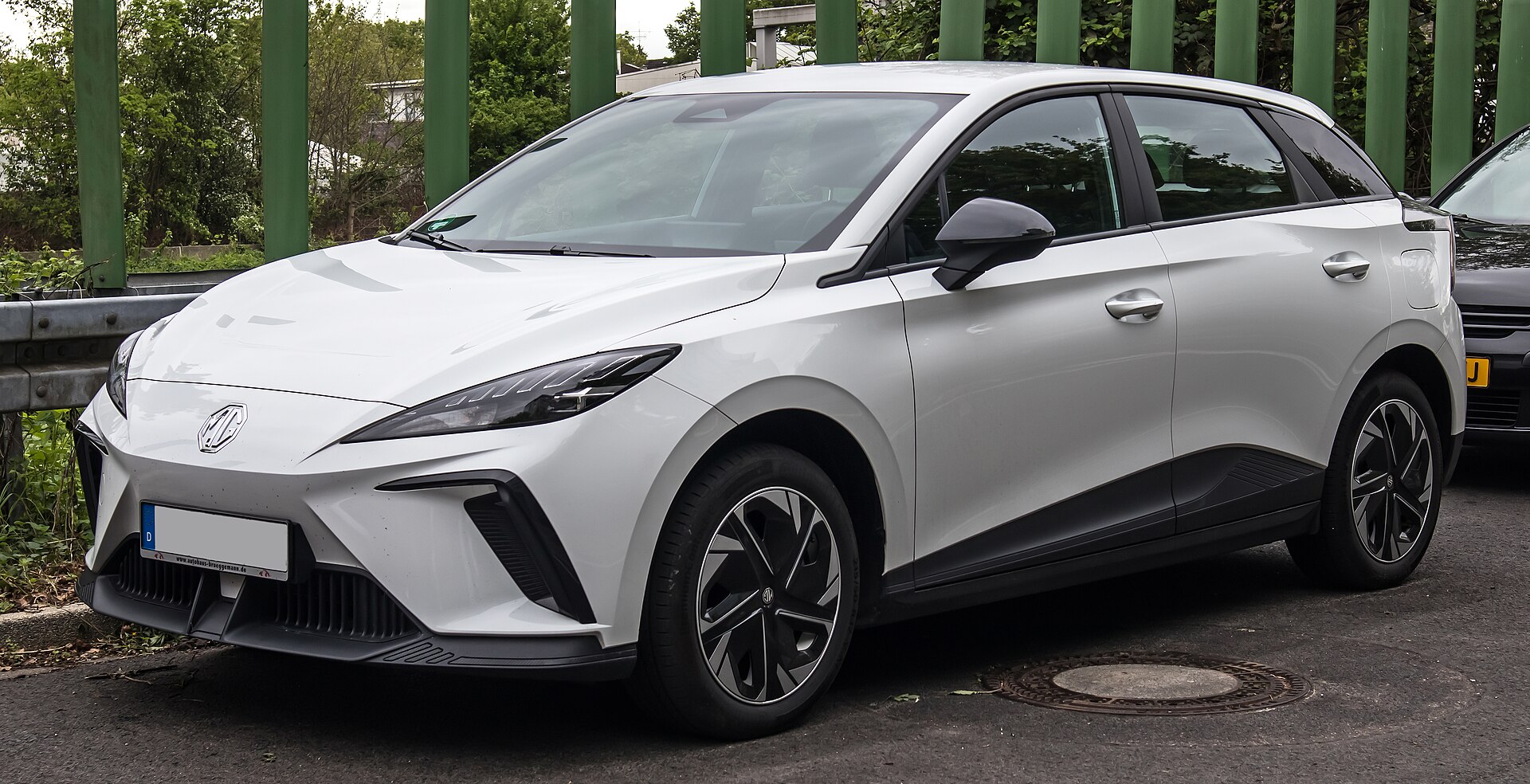
A search for a “2026 MG4” can lead to at least two distinct vehicles and several country catalogues. The refreshed MG4 EV keeps the 4,287 mm MSP-platform body and, in France, uses rear-wheel drive for Premium 64 and Premium 77 or dual-motor all-wheel drive for XPOWER. The MG4 EV Urban is a different, 4,395 mm E3-platform front-wheel-drive hatchback sold in Australia with 43 or 54 kWh batteries. Before comparing price, record the VIN, production month, destination market, exact trim, driven wheels and battery label from the vehicle and its conformity documents. A listing that says only “MG4 2026” is not specific enough to support a battery, range, charging or safety claim.
Battery capacity needs a definition
MG Motor France's March 2026 sheet calls Premium 64 a 64 kWh gross LFP pack, Premium 77 a 77 kWh gross NMC pack and XPOWER a 64 kWh gross NMC pack. Those are not interchangeable chemistries or drivetrains. They also should not be mixed with Green NCAP's 2024 Comfort test, which recorded a manufacturer-declared usable capacity of 61.7 kWh and independently measured 63.2 kWh usable. Gross nameplate capacity, declared usable energy and test-measured usable energy answer different questions. Ask the seller for the market specification sheet and battery diagnostic report, and write each number with its definition rather than presenting “64 kWh” as a universal pack.
Range figures belong to a cycle and version
For the refreshed French MY2026 range, MG publishes 452 km WLTP combined for Premium 64, 545 km for Premium 77 and 405 km for XPOWER. Poland's April 2026 catalogue lists another version matrix, including 49 kWh cars and WLTP values from 330 to 530 km, so even nearby European markets cannot safely share one table. Green NCAP is a separate independent test programme: its older Comfort RWD car used 16.4 kWh/100 km in the warm laboratory test, 17.6 in the cold-start test, 26.2 on its highway cycle and 34.9 at −7°C. Those results explain weather and speed sensitivity but must never be relabelled as WLTP or as a 2026 range.
Charging is a matrix, not one headline
The French MY2026 technical sheet gives all three versions an 11 kW AC onboard charger, but their DC peaks and claimed 10–80% times differ: Premium 64 is 154 kW and 25 minutes, Premium 77 is 144 kW and 40 minutes, and XPOWER is 140 kW and 30 minutes. The lower peak yet longer 77 kWh result is not a contradiction; pack size, chemistry and charge curve matter more than one maximum. Poland lists 6.6 or 11 kW AC and 88, 140 or 144 kW DC depending on version. Confirm connector standard, AC phase support, battery preconditioning, heat pump and the exact state-of-charge window for the destination car before modelling journey time.
Read safety ratings by applicability
Euro NCAP's original 2022 MG 4 Electric assessment reports 83% adult occupant, 80% child occupant, 75% vulnerable-road-user and 78% safety-assist scores, with its validity table describing a 4x2 car. ANCAP's related result applies only to 2WD variants built from March 2023 and expires in December 2028; it reports 83%, 86%, 75% and 81% under its published scoring. That evidence should not be stretched to XPOWER AWD. Urban has separate 2025 Euro NCAP and ANCAP assessments, its own AH4E series identity and different scores. Match the exact variant and build date to the rating page, then inspect airbags, driver-assistance equipment, tyres and repair history on the actual car.
Finish with VIN, approval and ownership checks
A cross-border purchase is not complete when the brochure numbers match. Use the destination government's recall service with the registration or VIN and obtain written evidence that applicable campaigns are closed; the UK DVSA gateway explicitly supports registration or make-model-year checks. For Australia, confirm that the individual vehicle is entered on the Register of Approved Vehicles under the relevant approval pathway, because a foreign specification does not establish Australian compliance. Also verify battery state of health, high-voltage warranty transfer, service history, charging cables, navigation and app region, cellular connectivity, parts support, tax treatment and insurance. Put unresolved items in the contract rather than assuming the MG badge makes them global.
Frequently asked questions
Is every 2026 MG4 EV fitted with a 64 kWh battery?
No. France lists 64 kWh Premium, 77 kWh Premium and 64 kWh XPOWER, Poland lists additional 49 kWh variants, and the separate Australian MG4 EV Urban uses 43 or 54 kWh packs. Match country, trim and VIN.
Is the 545 km figure a real-world guarantee?
No. It is the French Premium 77 WLTP combined certification value. Temperature, speed, elevation, load, tyres, heating and battery condition change road range, and another market's 77 kWh version may carry a different figure.
Which version charges fastest?
In the French MY2026 table, Premium 64 has the highest stated DC peak and shortest 10–80% claim at 154 kW and 25 minutes. Premium 77 is 144 kW and 40 minutes; XPOWER is 140 kW and 30 minutes under suitable conditions.
Does the five-star rating cover XPOWER and Urban?
Do not assume so. The original Euro NCAP validity table is 4x2 and ANCAP explicitly limits the original MG 4 Electric rating to 2WD. Urban has separate 2025 assessments; XPOWER AWD needs configuration-specific confirmation.
What documents should an importer request before payment?
Request the VIN and build plate, market specification and conformity papers, government approval or registration evidence, current recall clearance, battery-health report, service record, warranty-transfer terms and proof that local charging and connected services work.
Sources
- MG4 EV — Caractéristiques techniques, Tarif No. 30 du 9 mars 2026MG Motor France · 2026-07-28
- Ouverture des commandes de la nouvelle MG4 EVMG Motor France · 2026-07-28
- MG4 EV | Hatchback (EV)MG Motor Australia · 2026-07-28
- MG4 EV price list and technical parameters, R25, 2 April 2026MG Motor Poland · 2026-07-28
- MG4 EV Urban 2026 brochureMG Motor Australia · 2026-07-28
- MG 4 Electric — 2022 safety assessmentEuro NCAP · 2026-07-28
- MG MG4 EV Urban — 2025 safety assessmentEuro NCAP · 2026-07-28
- MG 4 Electric | Safety Rating & ReportANCAP Safety · 2026-07-28
- MG 4 EV Urban | Safety Rating & ReportANCAP Safety · 2026-07-28
- MG 4 Comfort electric RWD automatic — 2024 assessmentGreen NCAP · 2026-07-28
- Check if a vehicle, part or accessory has been recalledUK Driver and Vehicle Standards Agency · 2026-07-28
- Guide to vehicle type approvalsAustralian Government Department of Infrastructure · 2026-07-28