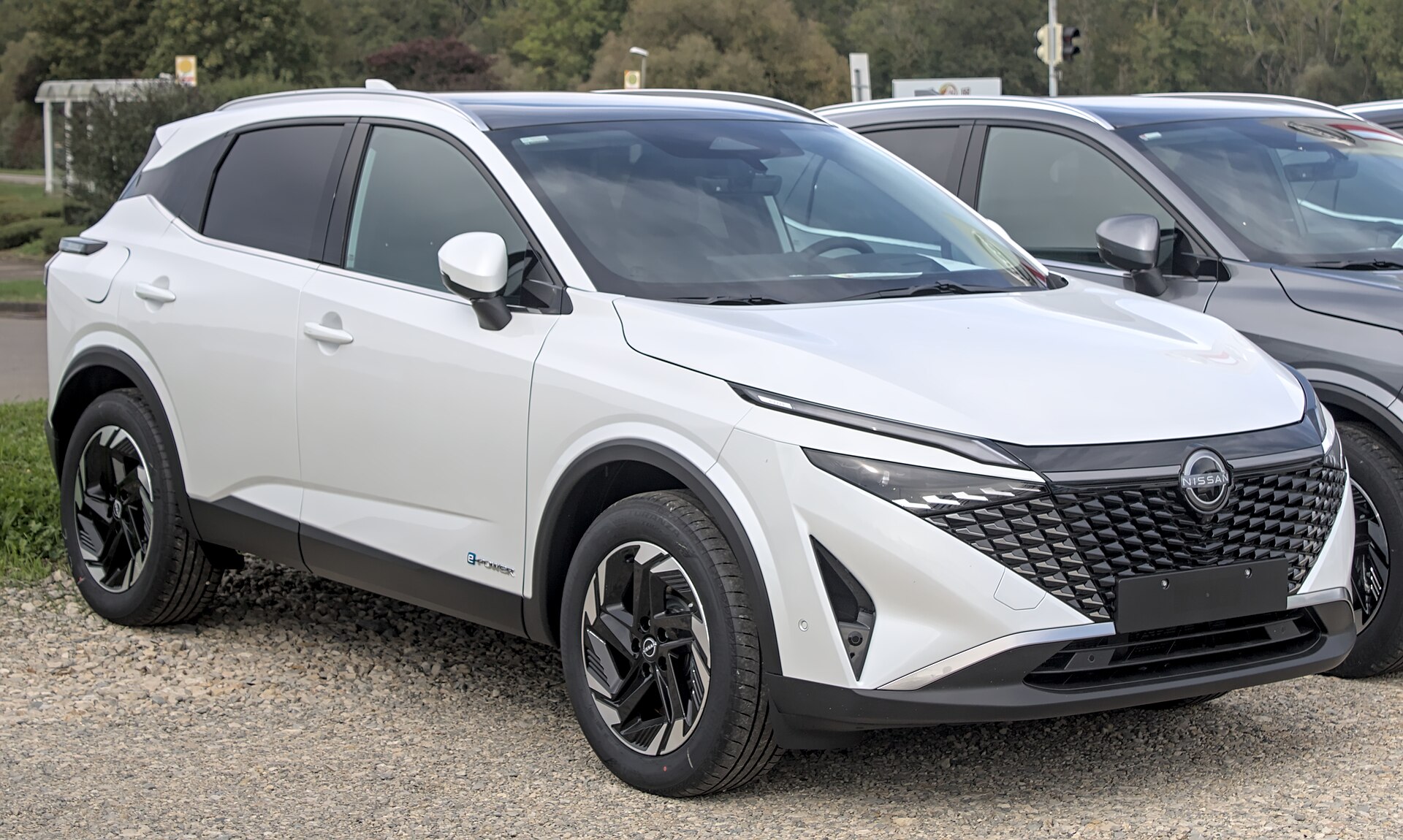
Fix the exact mild-hybrid or e-POWER architecture, equipment and market before comparing offers
An export buyer should be able to describe Nissan Qashqai without using the model badge alone. The minimum description is mild-hybrid versus e-POWER derivative, source market and VIN. Make the supplier repeat that description on the commercial file and reconcile it with photos and labels. If the description changes during the deal, reopen the technical comparison. This method costs little and catches a large share of cross-market mistakes before they become freight, registration or service problems.
Normalize quotations around propulsion architecture, dimensions, equipment and market proof
Before choosing the lowest Nissan Qashqai quote, reconstruct both vehicles from the evidence. Compare propulsion architecture, UK-reference dimensions, equipment and market proof. A low price can be legitimate, but it must correspond to a clearly defined product. When a gap cannot be explained by configuration, condition or commercial scope, ask the seller to reconcile it in writing. This turns price verification into a product-verification exercise rather than a race to the smallest number.
Can the destination support fuel use, driving pattern, route and service needs?
After the build is identified, test Nissan Qashqai against actual use: fuel use, electric-drive behaviour, no-plug e-POWER logic, route and service. These questions belong to the named destination, not to a regional assumption. The same vehicle may be technically valid in its source market yet be inconvenient to register, fuel, charge or maintain elsewhere. Assign each destination question to a responsible local party and keep the answer dated. If a critical operating condition cannot be confirmed, keep it visible as a purchase risk rather than smoothing it over with a general market claim.
Use each source only for the version and market it documents
The evidence record for Nissan Qashqai should answer one question at a time. The verified technical context is: Qashqai e-POWER needs a conceptual check: it is not a plug-in EV. The engine generates electricity and the wheels are driven by the electric motor, so charging-port assumptions from a BEV or PHEV are wrong. Mild-hybrid and e-POWER offers must stay separate. Keep that statement attached to its market and version. If another official source shows a different number, do not select the larger value or combine both into a synthetic specification. The contradiction is a signal to identify the offered build more precisely. A buyer gains more from a documented limitation than from an apparently complete table built from mixed markets.
Challenge the offer with a mild-hybrid and e-POWER specification mix
Instead of adding more features to the checklist, test one plausible failure: a Qashqai e-POWER offer described as a plug-in EV and evaluated against the wrong charging assumptions. For Nissan Qashqai, that scenario is useful because it attacks the decision-changing field rather than cosmetic equipment. Record the evidence needed to disprove it and make that evidence part of the payment gate. A transaction that survives the test is easier to hand to logistics, customs and service teams later.
Plan engine-generator, electric-drive diagnostics, software and parts before shipment
Do not end the Nissan Qashqai comparison at delivery. The buyer also needs a credible path for engine-generator/electric-drive diagnostics, software, battery-related service and parts. Confirm who can provide those functions, what evidence identifies the correct derivative and which items may require source-market assistance. This changes the economics of two otherwise similar offers because downtime and parts uncertainty can easily outweigh a modest purchase-price difference.
Resolve conflicts across the complete evidence set
A useful final exercise for Nissan Qashqai is to build a one-page decision memo without copying the brochure. Start with mild-hybrid versus e-POWER derivative, source market and VIN; then describe the buyer's actual use in terms of fuel use, electric-drive behaviour, no-plug e-POWER logic, route and service. Add a column showing which claims are proved by source-market evidence and which still need destination confirmation. Finally, write the support plan for engine-generator/electric-drive diagnostics, software, battery-related service and parts. The memo should be short enough for a manager, workshop or logistics colleague to understand in a few minutes. If the conclusion changes when one unsupported assumption is removed, the offer is not mature enough for payment. If the conclusion survives and the remaining unknowns are non-material, the buyer has a defensible basis for moving forward.
Separate live commercial terms from permanent specifications
Separate the Nissan Qashqai model file from the deal file. The model file holds sourced technical facts and evidence limits; the deal file holds the exact unit, condition, price, logistics, validity and destination-specific confirmations. Mixing the two creates false precision. A buyer who maintains both layers can update freight or stock without rewriting the technical evidence and can change destination without pretending that local rules are global.
Do not release payment while a material field is open
Use a risk-weighted stop rule for Nissan Qashqai. The decisive question is: buyer should confirm which Qashqai propulsion system is on the offered VIN before discussing charging, fuel use or service. Cosmetic uncertainty can be accepted if the buyer chooses; uncertainty that changes the technical product or destination usability cannot. Document who closed each major issue and when. This provides a defensible reason for proceeding and makes later disputes easier to separate from the evidence available at purchase time.
Keep a release file another reviewer can reconstruct
Nissan Qashqai: exact VIN / derivative and original sales market
Nissan Qashqai: build or model-year evidence tied to the offered unit
Nissan Qashqai: dated source for each decision-changing technical claim
Nissan Qashqai: photos, labels and vehicle documents that identify the same unit
Nissan Qashqai: destination-country registration/approval and energy/fuel fit checked separately
Nissan Qashqai: parts, diagnostics, software, warranty and service route for the destination
Nissan Qashqai: Incoterm/place, included/excluded costs, quote validity, payment milestones and written unresolved items
Frequently asked questions
Does Nissan Qashqai e-POWER need to be plugged in?
No. In the cited UK system, the petrol engine generates electricity and the electric motor drives the front wheels. The 1. 97 kWh usable battery is managed by the vehicle, so there is no external charging requirement.
Which UK Qashqai can tow more?
The brochure lists 1,680 kg braked for the manual mild hybrid and 1,830 kg for the Xtronic mild hybrid, versus 770 kg for e-POWER. The actual plate, towbar, train weight and destination law still control the unit.
Can 205 PS e-POWER be compared directly with 158 PS mild hybrid?
Not as a simple engine comparison. The e-POWER number describes traction-motor output in Sport mode, while 158 PS describes the mild-hybrid petrol engine. Their energy paths, transmissions, mass, efficiency and towing roles differ.
What UK-specific issues matter after export?
Check right-hand drive acceptance, headlamp pattern, display units, emissions and type approval, connected-service territory, parts support and warranty. Use the exact VIN and destination rather than assuming European or global compatibility.
Sources
- Nissan Qashqai overviewNissan · 2026-08-26
- Qashqai design and interiorNissan · 2026-08-26
- Nissan Qashqai UK brochure and technical specificationsNissan Motor (GB) · 2026-09-02
- VIN DecoderNational Highway Traffic Safety Administration · 2026-08-26
- Check for RecallsNational Highway Traffic Safety Administration · 2026-08-26
- World Forum for Harmonization of Vehicle RegulationsUnited Nations Economic Commission for Europe · 2026-08-26
- Vehicle ratingsInsurance Institute for Highway Safety · 2026-08-26
- Safety Gate alertsEuropean Commission · 2026-08-26