Southeast Asia sourcing
EV charging connectors in Southeast Asia: country rules and water resilience both matter
Southeast Asia is not one plug market. Procurement must verify each country's approval and network while engineering for humidity, heavy rain, standing water and shared-building electricity.
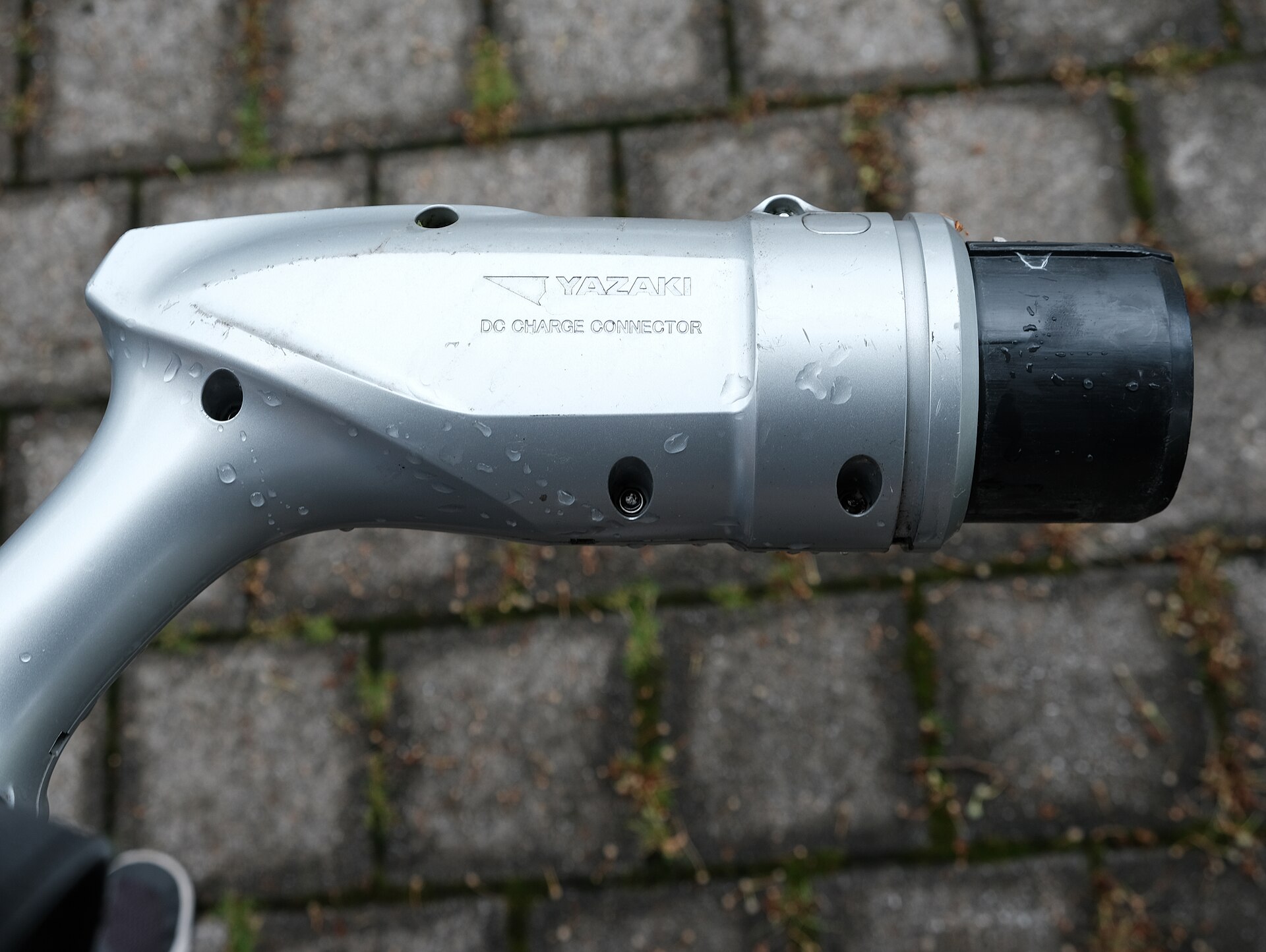
Treat each country as a separate project
Singapore's LTA requires chargers to meet national technical standards and follow type approval, installation certification and registration processes. Malaysia's Energy Commission publishes EVCS guidance. Indonesia's Ministerial Regulation No. 13 of 2020 covers public and private charging and battery swapping. These systems share a safety purpose, but they do not create one interchangeable ASEAN approval.
State the destination country, city, vehicle's original sales market and use case in the request for quotation. Require inlet and data-plate images, AC and DC specifications, phases, voltage and current, software version and manufacturer evidence. The importance of Type 2 or CCS2 in one national public system does not prove that every same-named vehicle variant will be compatible.
Cross-check the vehicle and the local network in both directions
Imported vehicles can originate in China, Europe, Japan or North America, while installed networks may retain several connector families. Start from the vehicle's AC inlet, DC inlet, onboard charger and battery voltage window. Then sample stations near homes, workplaces and intercity routes. The intersection of those two tables shows useful coverage more accurately than a national charger count.
Cross-border travel requires a separate check in every country. Record each critical station's connector, power, working dispenser count, hours, payment, account and verification date, then keep a fallback. A mechanical adapter does not automatically convert communication, locking, thermal monitoring or safety logic. Any adapter proposal needs a written manufacturer scope and a test on the exact vehicle.
Tropical rain and standing water require engineering controls
High humidity, intense rain, flooding, coastal salt and heat can combine to affect insulation, corrosion, cooling and connector cleanliness. Malaysia's official guidance expressly discusses avoiding and protecting against flood damage. Obtain the site's flood reference, drainage path, equipment elevation and cable route; do not rely on one enclosure rating as the entire flood strategy.
Open and semi-open car parks also face water tracking along cables, condensation, insects and vehicle impact. Provide rain cover with ventilation, drainage, wheel stops, an accessible emergency stop and scheduled cleaning. A post-flood inspection and re-energisation procedure is essential. Equipment that has been submerged should not return to service merely because the exterior looks dry.
Capacity in apartments and commercial buildings is a central constraint
Many urban users depend on apartment, office and mall parking. Charging must coordinate common-property approval, ownership, metering, fire review and existing distribution. Singapore's guide for strata-managed developments demonstrates that equipment approval is only one stage; installation, certification and accountable operation also matter.
A site engineer should measure peak demand, phase balance, earthing, fault current, residual-current protection and communications coverage. Multiple bays benefit from dynamic load management and staged expansion tied to departure needs. Do not simply add every wallbox rating, and do not turn an unassessed socket and extension lead into a permanent charging arrangement.
Two-wheelers, swapping and passenger cars need different acceptance plans
Electric two-wheelers and swapping businesses are significant parts of regional mobility, but their battery packs, connectors, locks and fire hazards differ from passenger-car charging. Indonesia's regulation addresses public charging and public battery swapping, illustrating that the business type must be identified before equipment is selected. Passenger-car IEC connector rules are not automatically a removable-battery interchange standard.
Build separate battery identification, connector, charging-rate, thermal, traceability and incident-isolation processes for each vehicle class. A swapping purchase should also address battery ownership, health data, station inventory, fire separation and vendor lock-in. A fast swap does not prove interoperability across brands or battery generations.
Use wet-season and connectivity-loss scenarios for acceptance
The evidence pack includes country rules, inlet and data-plate images, electrical and flood surveys, connector matrix, manufacturer environmental limits, public-network sample, payment and backend tests, spares and training. Tie every record to the exact equipment, software and date, and label unresolved items.
Acceptance should cover AC, DC, load management, offline transactions, post-rain checks and fault recovery. Record start success, sustained power, water or condensation inspection, error codes, payment and data recovery. Require repair or replacement when registration fails, the interface is wrong or environmental protection misses the contract. Future network growth and approval timing are dependencies, not guaranteed outcomes.
Assign maintenance responsibility in shared sites
Shared car parks commonly involve the property manager, owners' body, charging operator, electrician and vehicle users. At handover, define who checks standing water, cleans connectors, responds to protection trips, retains transaction data, authorizes software updates and attends night faults. Without a responsibility matrix, compliant equipment can remain unavailable after a small problem or be repeatedly reset by unauthorized people.
Training should use local language and clear illustrations for safe connection, cable storage, post-rain visual inspection, abnormal heat or smell, emergency isolation and fault reporting. Establish a monthly checklist and a pre-wet-season inspection, retaining photographs, protection or insulation tests, repairs and software records. Critical sites also need a fallback charging bay and selected spare parts so vehicles can continue operating while one unit is isolated for examination.
A shared-building agreement should define how electricity, service fees and common-area costs are allocated so billing disputes do not disable completed equipment. Metering points, user identity, tariff changes and privacy treatment must agree across the contract and resident rules. Recalculate load and protection before adding new bays; first-stage spare capacity is not permanent. After a typhoon, prolonged rain or outage, only authorized personnel should inspect and re-energise the system under a written procedure.
A recovery record should state the observed water level, moisture exposure, protective-device tests, insulation checks and the result of a controlled charging session. If evidence is uncertain, keep the unit isolated for assessment by the manufacturer or a competent person. Periodic emergency drills should cover safe isolation, vehicle movement and fallback charging when the application, QR service or communications are unavailable. Recalculate load, phase balance and protective-device coordination before every expansion because capacity left in the first stage is not permanent.
Frequently asked questions
Do all Southeast Asian countries use Type 2 and CCS2?
These interfaces are used in important national systems, but the region is not completely uniform. Verify the destination's current standards, vehicle origin and actual networks.
Does a high enclosure rating make a charger safe in a flood zone?
Not by itself. Elevation, drainage, cable entries, isolation and post-flood inspection are also critical and require local engineering.
Can every apartment parking bay receive a wallbox?
Only after building capacity, common-property approval, metering, fire requirements and load management are assessed. Ratings cannot simply be added together.
Are battery-swap interfaces interchangeable across brands?
That cannot be assumed. Pack dimensions, locks, communication, thermal controls and ownership systems must align with formal interoperability evidence.
What matters most before a cross-border EV trip?
Verify AC and DC interfaces, operator accounts and payment in every country, and retain recently confirmed fallback stations on critical legs.
Sources
- Regulating the Safety of EV ChargersLand Transport Authority of Singapore · 2026-07-13
- Electric Vehicle Guide for MCSTsLand Transport Authority of Singapore · 2026-07-13
- Guidelines on Electric Vehicle Charging SystemEnergy Commission of Malaysia · 2026-07-13
- Regulation of the Minister of Energy and Mineral Resources No. 13 of 2020Ministry of Energy and Mineral Resources of Indonesia · 2026-07-13
- Electric vehicle charging — Global EV Outlook 2025International Energy Agency · 2026-07-13
- IEC 62196-1:2022 — General requirementsInternational Electrotechnical Commission · 2026-07-13