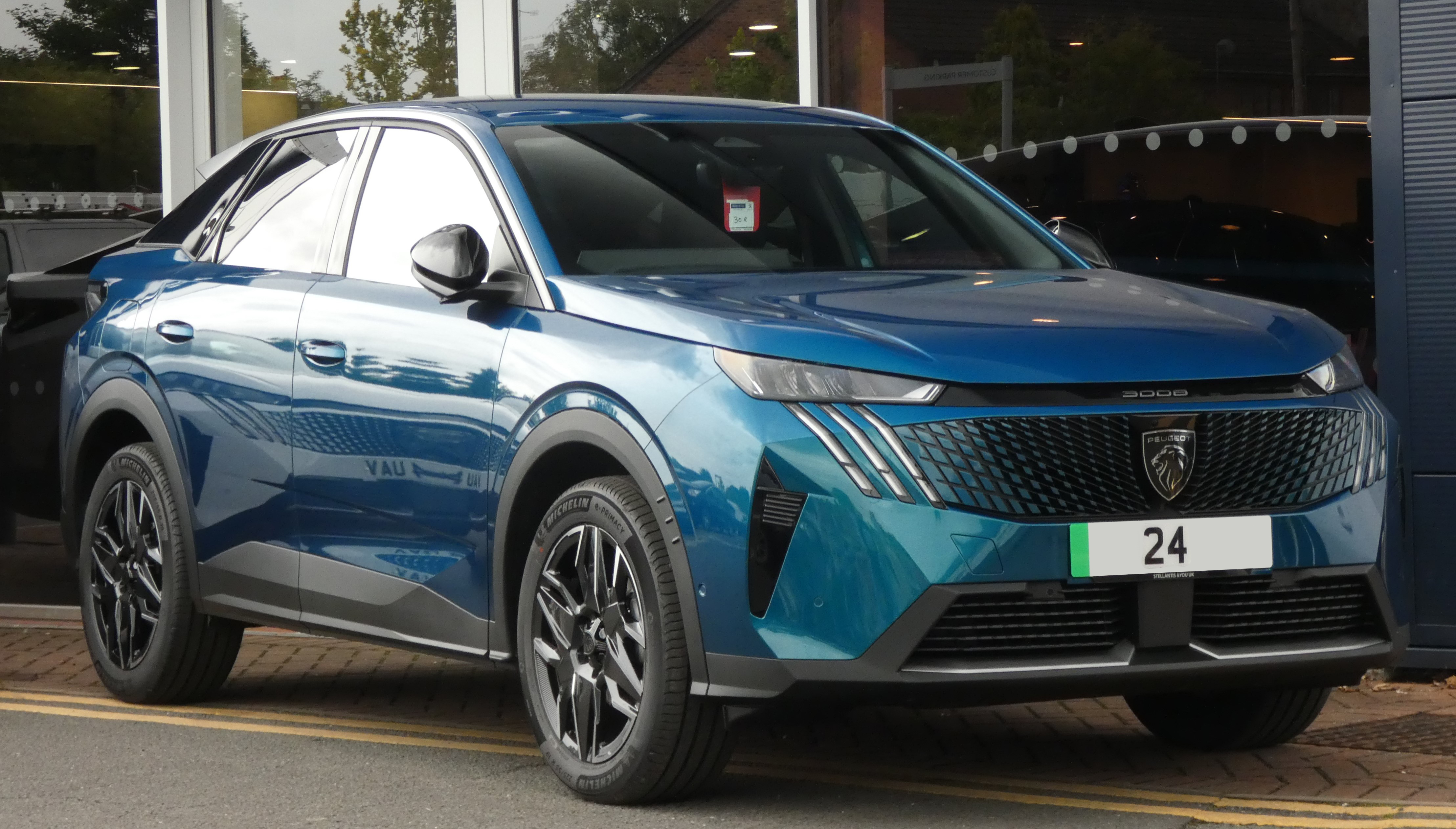
Normalize quotations around powertrain, battery where applicable, charging and market evidence
Use the same evidence questions for every Peugeot 3008 / E-3008 seller: E-3008 battery options such as 73 kWh/96. 9 kWh only where supported, versus separate Hybrid/PHEV evidence. Then ask each seller to identify any item that is assumed rather than proved. This small discipline makes the offers auditable and often reveals why one appears unusually cheap or unusually capable. After the product is normalized, commercial negotiation becomes much more straightforward.
Fix the exact 3008 Hybrid/PHEV or E-3008 BEV architecture before comparing offers
A cross-border offer for Peugeot 3008 / E-3008 becomes actionable only when 3008 Hybrid/PHEV versus E-3008 BEV architecture, battery/powertrain and VIN is fixed. The reason is practical, not bureaucratic: differences hidden behind the same badge can change fueling, charging, payload, body use, registration or workshop support. Ask the seller to identify the offered build in writing and retain the original evidence. That written baseline lets the buyer detect a silent substitution later, and it prevents a clean specification from one market being used to fill gaps in another.
Can the destination support charging or fuelling, trip, range and service needs?
Destination fit for Peugeot 3008 / E-3008 is an operating test, not a country stereotype. Check charging/fuelling, trip pattern, battery/range need, passenger use and service. Write the actual country, city or duty cycle into the worksheet. This prevents a broad regional page from becoming a substitute for local evidence. If the vehicle needs a particular fuel, connector, service skill or legal category, confirm that requirement where the vehicle will actually operate.
Use each source only for the version and market it documents
Official information is useful only inside its published scope. For Peugeot 3008 / E-3008, the current evidence supports this specific procurement point: 3008 and E-3008 share a name family but not an energy system. The cited E-3008 battery and output options belong to BEV derivatives, while 3008 Hybrid/PHEV follows a different refuelling, charging and service path. Keep the country, derivative and date beside that statement. A source from one market can be a strong reference while still being the wrong proof for another market. Where the offered unit differs, request the corresponding official material or VIN/build documentation rather than extending the source beyond what it actually says.
Challenge the offer with a 3008 and E-3008 powertrain mix
Instead of adding more features to the checklist, test one plausible failure: a 3008 family quotation mixing E-3008 battery/range data with Hybrid/PHEV equipment and price. For Peugeot 3008 / E-3008, that scenario is useful because it attacks the decision-changing field rather than cosmetic equipment. Record the evidence needed to disprove it and make that evidence part of the payment gate. A transaction that survives the test is easier to hand to logistics, customs and service teams later.
Plan battery/charging or hybrid/PHEV diagnostics, software and parts before shipment
Ask who will solve the first non-routine problem on Peugeot 3008 / E-3008. The support map should cover battery/charging diagnostics for E-3008 or hybrid/PHEV service for 3008, plus parts and software. If the answer relies on 'the local dealer probably can,' verify it against the imported build. A documented service route supports resale and fleet uptime; an assumed route transfers risk to the owner. This is especially important when source-market software, diagnostics or parts catalogues differ.
Resolve conflicts across the complete evidence set
A disciplined buyer can summarize Peugeot 3008 / E-3008 with four evidence blocks: identity (3008 Hybrid/PHEV versus E-3008 BEV architecture, battery/powertrain and VIN), proof (E-3008 battery options such as 73 kWh/96. 9 kWh only where supported, versus separate Hybrid/PHEV evidence), destination use (charging/fuelling, trip pattern, battery/range need, passenger use and service) and continuity (battery/charging diagnostics for E-3008 or hybrid/PHEV service for 3008, plus parts and software). Review those blocks independently. One strong block must not compensate for another that is missing; a well-documented engine does not prove local registration, and local service availability does not prove the advertised build. Once all four are sufficiently supported, place the live price and logistics beside them rather than inside them. This structure makes the final decision easier to audit and reduces the chance that an attractive commercial offer will silently overwrite an unresolved technical question.
Separate live commercial terms from permanent specifications
Separate the Peugeot 3008 / E-3008 model file from the deal file. The model file holds sourced technical facts and evidence limits; the deal file holds the exact unit, condition, price, logistics, validity and destination-specific confirmations. Mixing the two creates false precision. A buyer who maintains both layers can update freight or stock without rewriting the technical evidence and can change destination without pretending that local rules are global.
Do not release payment while a material field is open
Before paying for Peugeot 3008 / E-3008, perform one cold review. The key model-specific conclusion is: The buyer should choose the energy architecture that fits the destination before discussing trim or headline range. The reviewer should not need a phone call to understand the VIN/build, source scope, destination checks or commercial boundaries. Any decision-changing gap becomes a stop item. This is the last defense against a deal that looks complete only because the listing, brochure and quote repeat the same unsupported assumption.
Keep a release file another reviewer can reconstruct
Peugeot 3008 / E-3008: exact VIN / derivative and original sales market
Peugeot 3008 / E-3008: build or model-year evidence tied to the offered unit
Peugeot 3008 / E-3008: dated source for each decision-changing technical claim
Peugeot 3008 / E-3008: photos, labels and vehicle documents that identify the same unit
Peugeot 3008 / E-3008: destination-country registration/approval and energy/fuel fit checked separately
Peugeot 3008 / E-3008: parts, diagnostics, software, warranty and service route for the destination
Peugeot 3008 / E-3008: Incoterm/place, included/excluded costs, quote validity, payment milestones and written unresolved items
Frequently asked questions
What should be checked first?
Begin with the VIN, original registration market, build date, model code and factory equipment record, then confirm identity and derivative evidence: 3008 versus E-3008 powertrain identity on the same 3008 / E-3008. Missing identity evidence is a reason to pause the purchase.
Why is a model name insufficient?
The 3008 / E-3008 name can cover different drivetrains, bodies, seats, emissions approvals, safety packages and connected services. A nameplate helps find documents but cannot prove a unit's identity, condition or import eligibility.
Can a published specification be used as a quotation?
No. A published specification is a dated market reference, not evidence of stock, condition, transaction price, freight, tax, warranty or delivery. The purchase needs a VIN-linked contract and supporting records.
What image can be published?
Use a Peugeot 3008 / E-3008 photograph only after the exact derivative is identified and the creator, source page, reusable licence and retrieval date are recorded. Until then, the image remains unresolved rather than being substituted with an unrelated vehicle.
Sources
- Peugeot 3008 powertrain and use FAQPeugeot · 2026-08-28
- Peugeot E-3008 official model pagePeugeot · 2026-08-28
- VIN DecoderNational Highway Traffic Safety Administration · 2026-08-28
- Check for RecallsNational Highway Traffic Safety Administration · 2026-08-28
- World Forum for Harmonization of Vehicle RegulationsUnited Nations Economic Commission for Europe · 2026-08-28
- Vehicle ratingsInsurance Institute for Highway Safety · 2026-08-28
- Safety Gate alertsEuropean Commission · 2026-08-28